 Golf Travel
  Leaderboards
  Become a Member
  Shop
Shop  Trade In
 Course Spotlight
El Camaleón Golf Course at Mayakoba: Inside Riviera Maya’s Most Unique Golf Venue
By Brendon Elliott, PGA
Published on
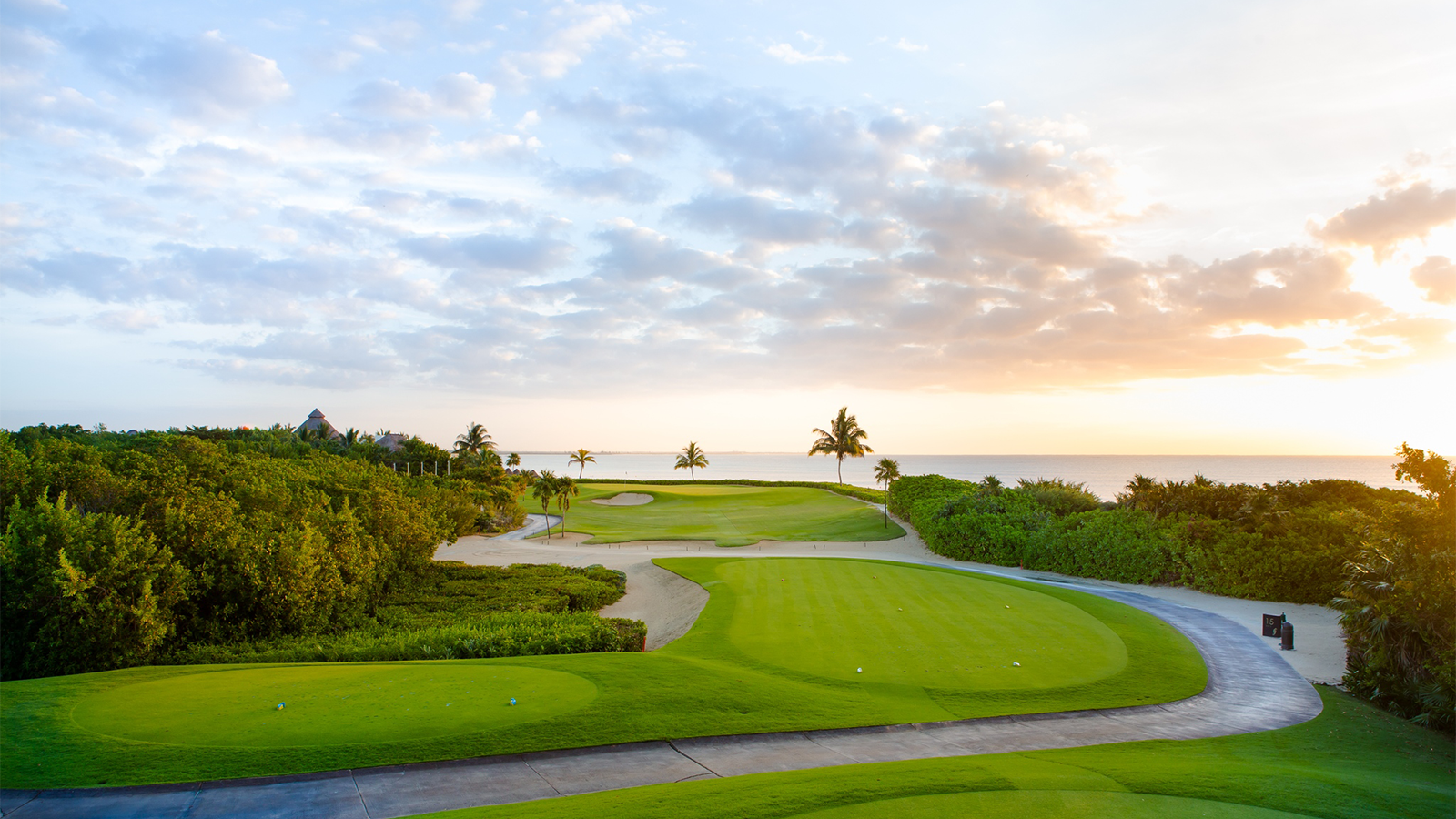
There are golf courses that feel built on land, and then there are golf courses that feel woven through it.
El Camaleón Golf Course at Mayakoba fits the second description. This week, the LPGA Tour heads to Playa del Carmen, Quintana Roo, Mexico, for the Mexico Riviera Maya Open at Mayakoba, played April 30-May 3 on one of the more visually distinctive tournament venues in professional golf.
The setting alone gives the event a different feel. The course moves through tropical jungle, mangroves, freshwater canals and stretches of Riviera Maya oceanfront, giving players a venue that changes character from one part of the property to the next.
That is part of the story behind the name. El Camaleón, Spanish for “the chameleon,” is not just a clever resort-course title. It speaks to the way the course shifts as the round unfolds, moving from enclosed corridors to open coastal looks, from jungle-framed holes to water-lined strategy and from resort beauty to tournament pressure.
For the LPGA, it is a striking stage. For golf fans, it is a course worth understanding before the first tee shot is struck.
A Greg Norman Design With a Changing Personality
El Camaleón was designed by Greg Norman and opened in the mid-2000s as the golf centerpiece of the Mayakoba resort development. The 18-hole, par-72 layout has long been known for how it blends tournament golf with the natural character of the Riviera Maya.
That mix is what makes the course different from a standard tropical resort layout. It is not simply a pretty course near the water. Much of its identity comes from the way it uses multiple environments in one round. The routing moves through jungle, mangroves, limestone canals and oceanfront sections, creating a layout that rarely feels the same for long.
The course has also carried real professional golf significance. El Camaleón became the first course in Latin America to host an official PGA TOUR event in 2007, and Mayakoba has since become a recognizable name in global golf. Now, with the LPGA in town, the course adds another chapter to a tournament résumé that already includes major men’s professional events.
Why the Course Looks Different on TV
The first thing viewers may notice is how often the course changes visually.
Some holes are framed by dense vegetation and mangroves. Others introduce freshwater canals or lagoons. Then the routing opens toward the Caribbean Sea, giving the course a coastal personality without making the entire round feel like traditional seaside golf.
That visual variety also creates a different kind of tournament test. El Camaleón is not only about length. It asks players to solve angles, control trajectory, manage wind and stay disciplined when the surroundings are pulling their attention in different directions.
The turf also matters. El Camaleón uses paspalum, a grass often found in coastal and tropical golf environments because of its salt tolerance. For players, that can mean a different feel underfoot, a different response on approach shots and a different adjustment around the greens compared with more familiar weekly surfaces.
The Cenote Hole Remains the Signature Image
Every course has something fans remember. At El Camaleón, the signature image is the cenote.
The famed natural cave feature comes into play visually on the par-5 seventh hole, where it sits in the fairway and gives the hole one of the most recognizable looks in golf. It is memorable because it feels specific to this place, a reminder that the course was routed through a landscape with geological character rather than placed on a blank canvas.
During tournament play, features like that do more than decorate a hole. They influence comfort. They shape decisions. They create television moments. Even when the best players in the world are not directly threatened by a visual feature, it can still affect how a hole feels from the tee and how fans remember the round.
For the LPGA this week, the seventh should again be one of the holes viewers circle. It is not only a scoring opportunity as a par 5. It is also the hole most likely to introduce casual viewers to El Camaleón's personality.
Ocean Holes Add Beauty and Trouble
While the cenote may be the course’s most famous feature, the oceanfront holes help give El Camaleón its sense of place.
In tournament play, those holes can offer both beauty and complexity. Any time a course moves toward the coast, wind becomes part of the conversation. Even when the breeze is not overpowering, it can alter club selection, affect approach-shot control and create doubt on exposed shots.
That matters on a course where scoring may depend on taking advantage of the right holes while staying patient through the more demanding stretches. The ocean holes also help give the event a visual identity. Golf is a global game, and the LPGA’s visit to Mayakoba gives the tour a setting that looks and feels distinctly different from many stops on the schedule.
What Will Matter Most This Week
At El Camaleón, players will need more than good ball-striking.
They will need to manage visual intimidation. They will need to handle changing wind conditions. They will need to understand when the course offers scoring chances and when it asks for discipline. They will need to adjust to paspalum surfaces and control their approaches into greens where position can matter as much as proximity.
The winner this week may not simply be the player who attacks the most. She may be the player who best understands the rhythm of the course. On a chameleon-like layout, that means adapting before the course forces the issue.
That is what makes El Camaleón such an interesting LPGA host. It is beautiful, yes. It is resort golf, certainly. But it is also a course with character, professional history and a routing that changes enough to keep players thinking.
This week in Mexico, the LPGA does not just get a scenic stage. It gets one of the more distinctive venues on the schedule.
PGA of America Golf Professional Brendon Elliott is an award-winning coach and golf writer. Read his recent “The Starter” on R.org and his stories on Athlon Sports. To stay updated on his latest work, sign up for his newsletter and visit OneMoreRollGolf.com.