Golf Travel
  Leaderboards
  Become a Member
  Shop
Shop  Trade In
 quick coaching
How Remote Coaching Is Changing Junior Golf Development
By Brendon Elliott, PGA
Published on
For a long time, golf instruction had one picture.
A student stood on the lesson tee. A coach stood nearby. The coach watched, explained, adjusted, demonstrated and sent the player away with something to practice.
That model still matters. It always will.
But it is no longer the only serious way to coach.
Remote coaching used to be viewed as a backup plan. It was something families tried when they could not get to a lesson, could not find the right coach nearby or needed a quick video review between tournaments.
That view is changing fast. When remote coaching is done correctly, it can be one of the most effective ways for a junior golfer to develop, especially if the player lives in an area where high-level coaching options are limited.
I have seen that firsthand.
A Personal Example From Home
I grew up in Norwich, New York. I left that area in 1996 and moved to Florida to begin chasing my own PGA journey and build a life in the golf business.
Nearly three decades later, some of the most meaningful coaching work of my career has brought me right back there, just in a very different way.
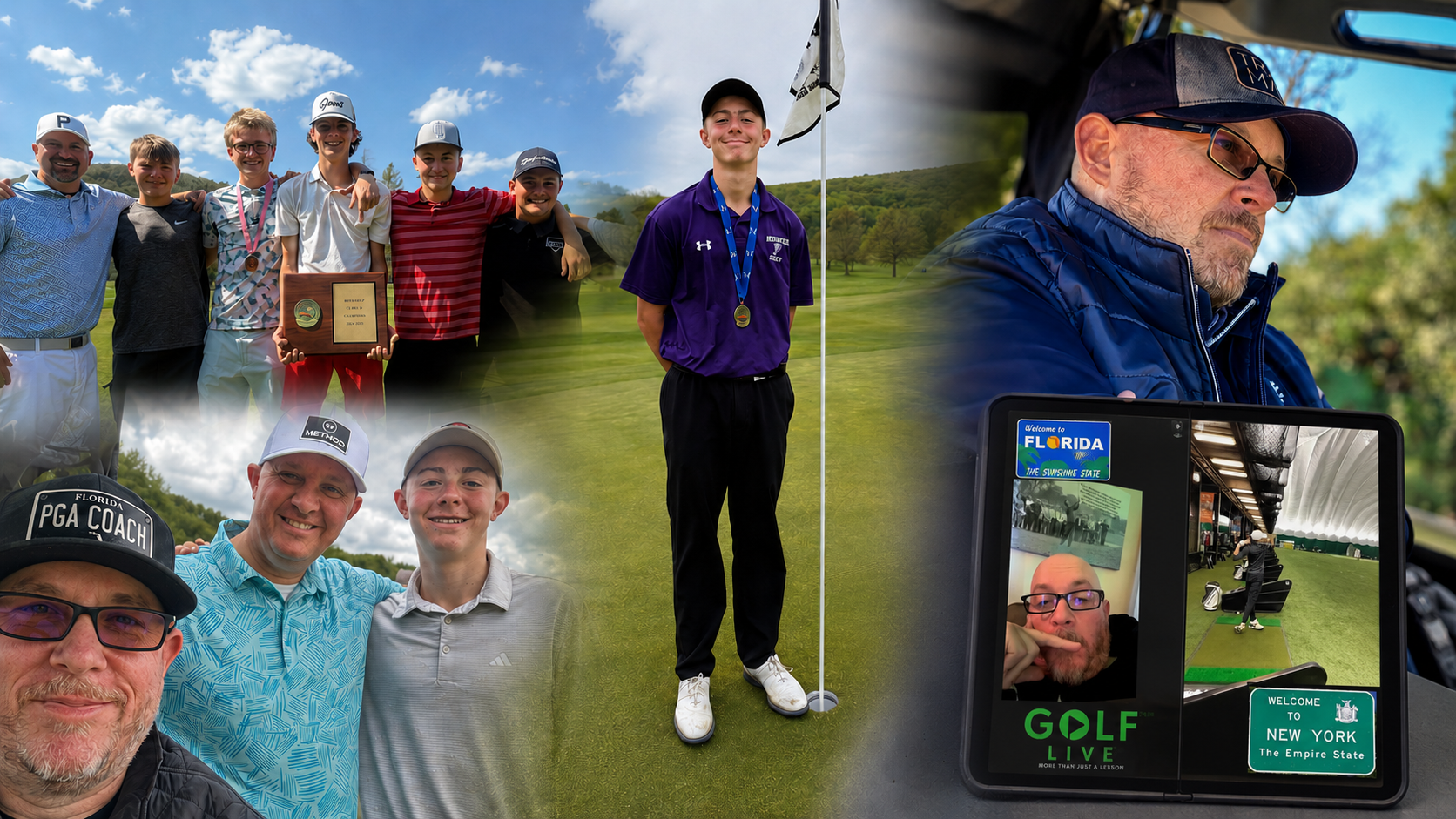
For almost three years, I have coached Brevin Bennett remotely. Brevin is a young player from the same small-town area I grew up in. He has worked, listened, grown, competed and accomplished a lot. He won the 2026 Section IV Medalist Tournament, qualified for states and finished tied for 14th out of 99 others from 11 Sections in NYS. In the process, he made the “All State Team”. Additionally, Brevin won the Northeastern New York PGA Section Boys Junior Championship, won an AJGA Qualifier with a score of 69 and has continued to develop into a player with a serious future in the game.
But the scores are only part of the story.
The relationship matters just as much. The trust matters. The communication matters. The shared background matters. I know where he is from. I know what it means to be a golfer trying to grow from that part of Central New York. That connection has made the coaching even more meaningful.
The same is true with Bennett Paden, another player from that region. Bennett is heading to SUNY Delhi to study Professional Golf Management and continue his life in the game. The coolest part, SUNY Delhi is my Alma Mater. Our work has grown beyond swing coaching into mentorship, college readiness, practice habits and helping him understand what it means to build a future in golf.
That is the real power of remote coaching. It is not just sending a swing video and getting a tip back.
Done well, it becomes a relationship.
What Good Remote Coaching Actually Looks Like
Good remote coaching is not random. It needs structure.
A junior golfer should not simply send a video whenever something feels wrong and wait for a quick fix. That is not coaching. That is troubleshooting.
The best remote coaching includes:
- Clear swing video from the right angles.
- Regular communication between player and coach.
- Practice plans the player can actually follow.
- Round recaps after tournaments or meaningful rounds.
- Feedback that connects the swing, the ball flight and the player’s goals.
- Parent communication when appropriate.
- Accountability between lessons.
That last piece is huge. One in-person lesson can be valuable, but improvement usually happens between lessons. Remote coaching gives the coach a way to stay connected during that in-between time.
A player can send practice clips. A coach can respond with voice notes, drawings, drills or a plan for the next session. The player can report what happened in a tournament round. The coach can help turn that round into learning instead of just a score.
That is how development becomes consistent.
Parents Should Consider It
Parents of junior golfers often feel stuck if they do not live near a major golf market. They may have a motivated child, but limited access to the right coach, the right facility or the right developmental structure.
Remote coaching can help solve that.
It does not mean a player should never take an in-person lesson. There are times when hands-on coaching, live ball flight and face-to-face communication are extremely valuable. But a strong remote program can give a junior golfer access to a coach who fits their personality, goals and stage of development.
That fit matters more than geography.
Before choosing a remote coach, parents should ask a few questions:
- Does the coach offer a clear system, or only video tips?
- How often will the player receive feedback?
- What should the player submit each week?
- Will the coach help with practice structure and tournament reflection?
- Does the coach understand junior development, not just swing mechanics?
- How are parents included without taking over the process?
Those questions will tell you a lot.
A Simple Remote Coaching Routine
For junior golfers trying remote coaching, I like a simple weekly rhythm.
One swing or skill video: This could be full swing, wedge work, putting or short game.
One practice update: What did you work on, how long did you practice and what improved?
One round reflection: What went well, what cost shots and what is the one thing to practice next?
One question: The player should ask something each week. That teaches ownership.
This routine helps a junior learn how to communicate, reflect and self-coach. Those skills travel with them to high school golf, tournament golf, college golf and beyond.
The Lesson For Golf Families
Remote coaching is no longer a lesser version of instruction.
When done right, it can give a junior golfer access, structure, accountability and a relationship with a coach who truly understands them. It can help a player in a small town work with a PGA Professional hundreds or thousands of miles away. It can help families who want more than occasional tips. It can help motivated kids build a plan.
Brevin Bennett and Bennett Paden have reminded me of that in a very personal way.
Sometimes coaching comes full circle. I left Central New York in 1996 to chase a career in golf. Now, all these years later, remote coaching has allowed me to help two young players from that same region chase their own path in the game.
That is not a backup plan.
That is what modern coaching can be.
PGA of America Golf Professional Brendon Elliott is an award-winning coach and golf writer. Read his recent “The Starter” on R.org and his stories on Athlon Sports. To stay updated on his latest work, sign up for his newsletter and visit OneMoreRollGolf.com.