 Leaderboards
  Become a Member
  Shop
Shop  Trade In
 Course Spotlight
Inside Augusta National: The Historic Story Beyond the Masters
By Brendon Elliott, PGA
Published on
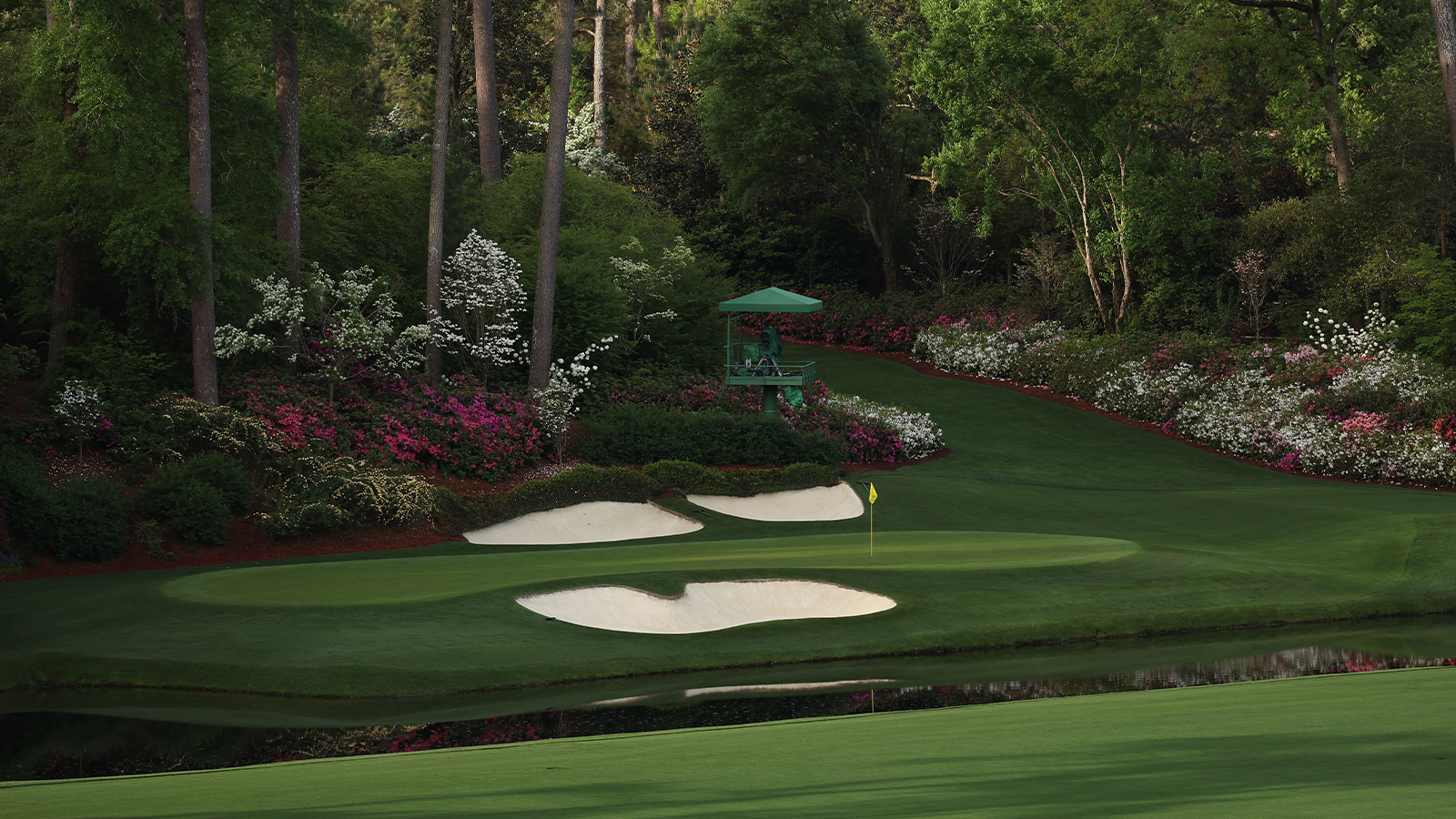
There are great golf clubs, there are iconic golf clubs and then there is Augusta National Golf Club.
For me, Augusta has never been just a place where the Masters is played. It is an oasis. It is a springtime pilgrimage. It is a reset. As a PGA Member, I have had the privilege of walking those grounds nearly every year since 2010, missing only two along the way. Most years, I spend at least the workweek there, and sometimes longer. Every trip north from Orlando feels the same in the best possible way. It fills me up. It reminds me why I fell in love with this game in the first place and why, after nearly three decades in the golf industry, my passion for it still runs as deep as ever.
That is part of what makes Augusta National so powerful. It is not simply a club with history. It is a place that makes you feel history. You sense it when you drive in. You feel it when you walk the property. And if you are lucky enough to spend time there year after year, as I have, you begin to appreciate that the story of Augusta National is even richer than the tournament that made it world famous.
Before There Was Augusta National
Long before Bobby Jones, Marion Hollins and Alister MacKenzie gave the land its golfing identity, this property had a very different life. It was home to Fruitland Nurseries, founded in 1858 by Louis Mathieu Edouard Berckmans and his son Prosper Jules Alphonse Berckmans. It became the first large-scale horticultural nursery in the Southeast and helped shape the Southern landscape with fruits, ornamental plants and trees that spread well beyond Augusta.
That matters because Augusta National’s beauty was not dropped in from above for television cameras. Beauty was already here. The land itself had a horticultural soul before it ever had bentgrass greens, gallery ropes, or Sunday roars.
That old Berckmans home became the clubhouse we know today. The land’s botanical history still echoes through the course in obvious and subtle ways. Even the hole names, with their flowers, shrubs and trees, are not some made-for-branding creation. They are a direct nod to what the property once was.
One of my favorite little historical nuggets is Magnolia Lane. For most golf fans, it is one of the most recognizable entrances in sports. But those famous magnolias were planted in the 1850s by the Berckmans family, decades before Augusta National even existed. In other words, one of the club’s most iconic images predates golf on the property entirely.
A Dream Built During Hard Times
In the early 1930s, Bobby Jones, fresh off his 1930 Grand Slam, wanted to create a winter golf club in his home state of Georgia. He teamed up with Clifford Roberts and brought in the brilliant Alister MacKenzie to design the course. They settled on the old Fruitland property and began building during the depths of the Great Depression.
That alone is one of the most remarkable parts of the Augusta story. Think about the timing. The economy was battered. Uncertainty was everywhere. And yet here was this bold, visionary project taking shape in Georgia soil.
Construction began in 1931, the course was completed in 1932 and the club formally opened in January 1933. MacKenzie and Jones did not set out to build a brute. They wanted strategy, width, angles and options. They wanted a course that rewarded thoughtful golf and imagination. That is still what comes through, even after decades of changes to keep pace with the modern game.
There is also a bittersweet layer to this chapter. MacKenzie died on Jan. 6, 1934, just months before the first tournament was played there. He helped create one of the greatest stages in golf and never got to see it become what it is today.
Before It Was “The Masters”
Another detail that often gets lost in the glow of modern tradition is that the Masters was not originally called the Masters. The first tournament at Augusta National, played in 1934, was called the Augusta National Invitation Tournament. Horton Smith won that inaugural event. The now-famous Masters name was not officially adopted until 1939.
That is one of those facts I always love revisiting, because it reminds us that even the grandest traditions start out a little less polished, a little less certain and a little more human than we tend to remember.
In that first 1934 tournament, the routing was different from what it is now. The current 10th hole played as No. 1, and the current 1st hole played as No. 10. Augusta National adjusted the sequence after the first tournament, meaning even this sacred layout was still evolving before it became the version that now lives in the minds of golf fans everywhere.
Here is another fun nugget: the first two Senior PGA Championships were contested at Augusta National in 1937 & 1938, won by Jock Hutchison & Fred McLeod, respectively.
The Details That Give the Club Its Soul
Part of what has always captivated me about Augusta National is that the place is full of details that deepen the experience the more you know. The clubhouse dates to 1854 and is believed to be the first concrete house built in the South. Behind it stands the Big Oak Tree, another living piece of the property’s long memory.
Then there is Amen Corner, perhaps the most famous stretch of holes in the game. Even that name has a story. Herbert Warren Wind coined it in a 1958 Sports Illustrated piece, meaning one of golf’s most legendary phrases was added after the course had already begun establishing itself in tournament lore.
These details matter. They are not trivia for trivia’s sake. They are part of what turns Augusta National from a famous club into a place with soul.
As someone who has walked those grounds year after year, I can tell you that Augusta does not lose its magic with familiarity. It deepens. The first visit leaves you wide-eyed. The latter ones make you more attentive. You begin to notice how the old and the new coexist there. You feel how the club honors its traditions while continuing to shape its future.
Why Augusta Still Hits Me the Same Way Every Spring
For all of Augusta National’s prestige, what keeps drawing me back is not simply the exclusivity or the history. It is the feeling. It is the privilege, as a PGA Member, of stepping onto that property each spring and being reminded of how special this game can be.
I have been fortunate to attend all but two Masters since 2010. I usually spend the workweek there, taking in as much as I can, from the practice areas to the competitive rounds to the quiet moments when the course seems almost to whisper its history back to you. Every year, it feels like a reset button. It reminds me to be grateful for the game, for the people in it and for the opportunity to make a life in golf.
That is why Augusta National remains historic in the fullest sense. It is not only the home of a major championship. It is a former nursery, a Depression-era dream, an architectural masterpiece and a place where the smallest details carry the weight of generations. The Masters may be the event that made Augusta National world famous, but the club’s deeper story is what makes it unforgettable.
PGA of America Golf Professional Brendon Elliott is an award-winning coach and golf writer. Read his recent “The Starter” on R.org and his stories on Athlon Sports. To stay updated on his latest work, sign up for his newsletter and visit OneMoreRollGolf.com.