Golf Travel
  Leaderboards
  Become a Member
  Shop
Shop  Trade In
 Course Spotlight
Memorial Park Golf Course: Why Houston’s Historic Muni Still Defines Big-Time Golf
By Brendon Elliott, PGA
Published on
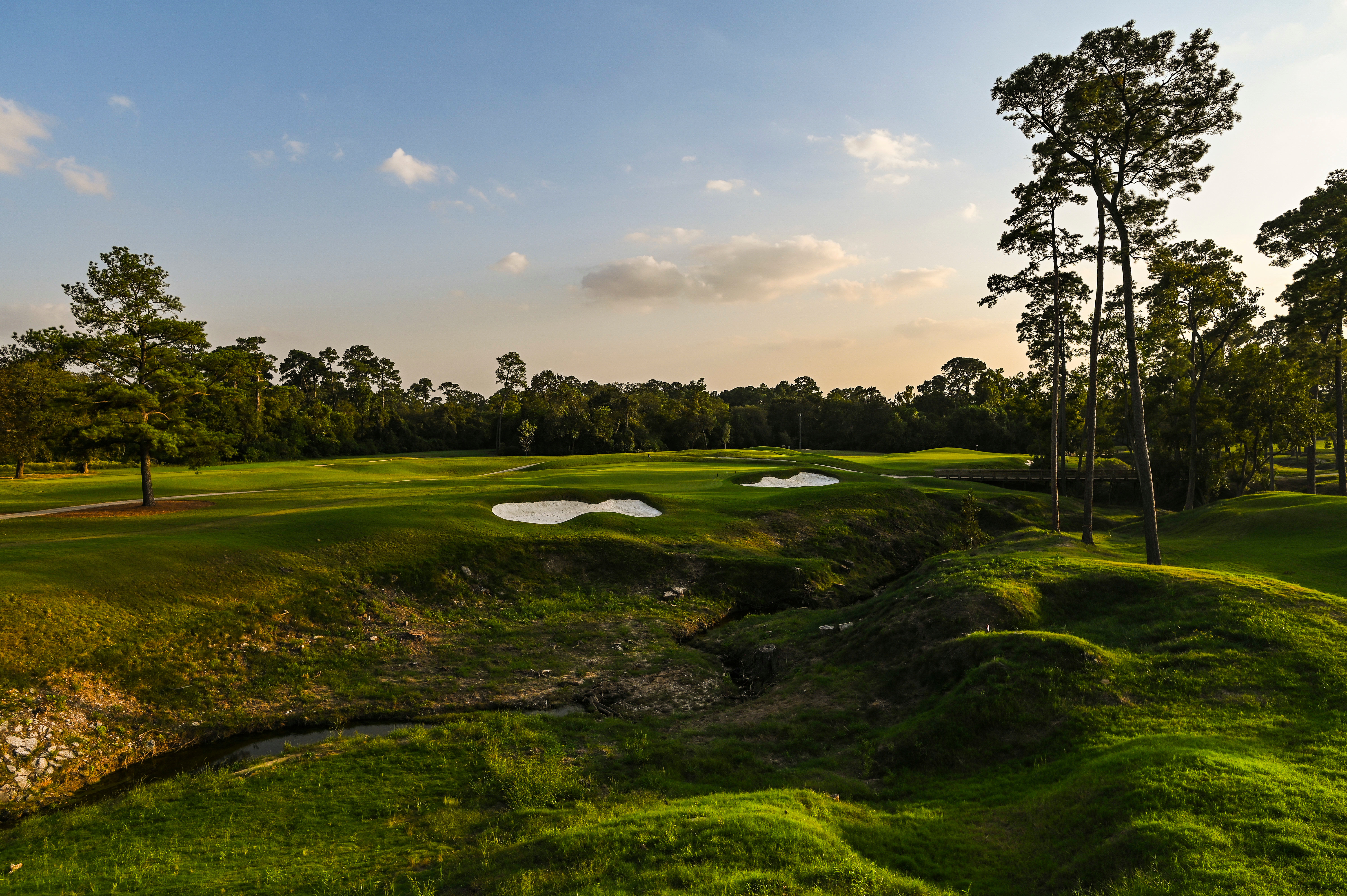
There is something refreshing about Memorial Park Golf Course serving as the stage for the Texas Children’s Houston Open. In an era when so many TOUR stops unfold behind the gates of private clubs or resort properties, Houston’s week belongs to a municipal golf course with real history, real foot traffic and a real connection to the city around it. That matters. Memorial Park is not pretending to be anything other than what it has always been at its core: a public course built for people, now sharpened into a championship test.
A Course With Roots Deeper than This Week’s Leaderboard
Memorial Park’s story reaches back more than a century. The course began as a nine-hole layout with sand greens near the hospital at Camp Logan, built for recovering soldiers. In 1935, noted architect John Bredemus redesigned the course, and the 1936 version became one of the most important public golf properties in Texas. It later hosted the Houston Open in 1947 and again from 1951 through 1963, before the tournament eventually found its way back here in 2020 after a major renovation.
That return was no small feat. The Astros Golf Foundation brought in Tom Doak, with Brooks Koepka as player consultant, to create a course capable of testing the best players in the world while still serving everyday golfers. The renovation lengthened some holes, shortened others, reworked bunkers, removed trees in key areas and introduced a state-of-the-art stormwater irrigation system designed to capture and retain 80 million gallons for course use. It is modern infrastructure wrapped around old municipal bones, which is part of what makes Memorial Park feel both timely and timeless.
Big, Bold and More Strategic than Flashy
This week’s setup tells you a lot about what Memorial Park asks of players. It is a par 70 stretching to 7,475 yards, making it one of the longest par-70 tests the TOUR sees. The greens average 7,000 square feet, the fairways typically range from 30 to 40 yards wide and there are only 24 bunkers on the entire property, far fewer than the TOUR norm. Water is in play on just four holes. On paper, that might sound less severe than some TOUR venues. In reality, it shifts the examination elsewhere. Memorial Park is not about surviving hazard after hazard. It is about driving to the right side, controlling trajectory and then solving large, nuanced greens and awkward angles into them.
That is what gives the course its personality. Memorial Park does not overwhelm players with visual clutter. It gives them space, then asks smart questions from that space. Long approaches, bold green contours and a handful of deceptive driving zones make the course feel more demanding as the round goes on. It is a layout where good ball-strikers can thrive, but only if they stay disciplined.
The Holes That Could Decide the Week
If you are circling the holes most likely to shape this championship, start with the fourth. At 490 yards, it features one of the most important tee shots on the course. What looks one way from the box begins to bend another as players move toward the green, and anything too aggressive or too careless can leave a miserable approach.
Then there is the 13th, a 406-yard par 4 that can tempt players into getting greedy. It can be set up as drivable, but the narrow, crowned L-shaped green demands precision. It is the kind of hole where birdie is there for the taking, but so is frustration.
The closing stretch should be terrific theater. The par-3 15th is called the loudest hole in Texas on the tournament’s own course guide, and at just 155 yards, it is short only on the card. The green is narrow, the misses are uncomfortable and momentum can change in a hurry. The par-5 16th offers risk and reward with water guarding three sides of the green. Then comes the striking 17th, a short par 4 with an S-shaped fairway curling around a retention pond before a green that pushes into the water. It is one of those holes that asks for nerve as much as execution.
The Maintenance Story Matters Here
One reason Memorial Park deserves appreciation this week is that it is not some cloistered tournament-only venue. According to the GCSAA fact sheet, the course handles nearly 50,000 rounds a year, which means superintendent Parker Henry and his team are balancing elite tournament presentation with the daily reality of public golf. Henry is in his third year at Memorial Park and is overseeing his just third professional event as lead superintendent. He is supported by key staffers Kyle Neal, Derrick Ross, Andrew Martin and Glen Childers, along with 29 agronomy employees and 50 tournament volunteers.
And this has not been a simple lead-in. The GCSAA notes that there was no measurable rainfall from Nov. 1 to Jan. 21, which complicated the overseed process. More recently, warm and dry conditions have helped the bermudagrass underneath while making moisture management tougher for the ryegrass above. Add in a newly finished driving-range renovation in late February and the fact that Memorial Park will also host the LPGA’s Chevron Championship in April, and the workload becomes even more impressive.
That, maybe more than anything, is the beauty of Memorial Park. This place is a TOUR stop, yes. But it is also a busy city course with a deep civic identity. This week, the best players in the world will borrow it for a few days. Then Houston gets it back.
PGA of America Golf Professional Brendon Elliott is an award-winning coach and golf writer. Read his recent “The Starter” on R.org and his stories on Athlon Sports. To stay updated on his latest work, sign up for his newsletter and visit OneMoreRollGolf.com.