Golf Travel
  Leaderboards
  Become a Member
  Shop
Shop  Trade In
 Advanced
Nelly Korda Putting Lesson: How Early Round Focus and Speed Control Can Save Your Score
By Brendon Elliott, PGA
Published on
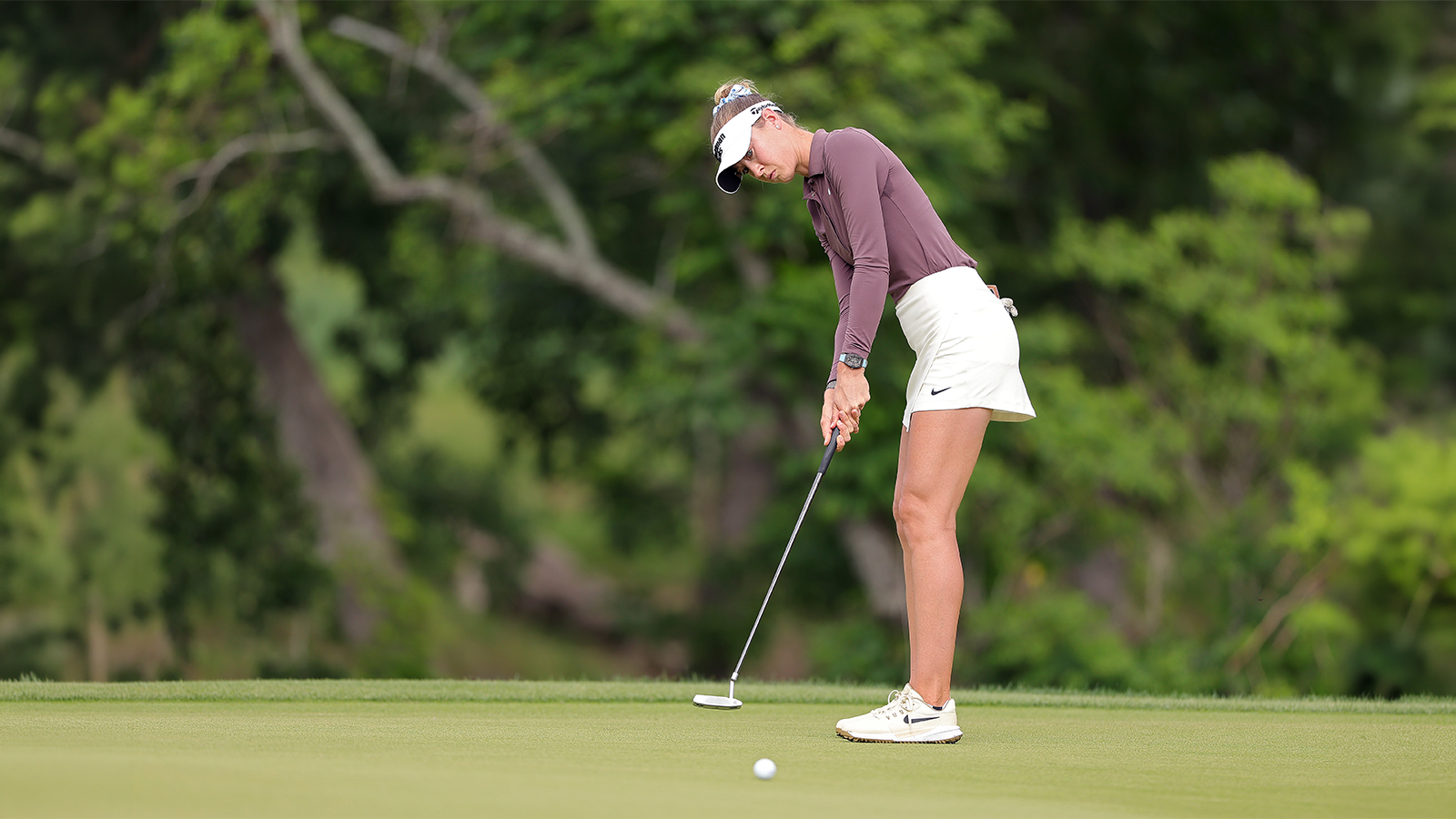
Nelly Korda’s golf swing usually takes up most of the conversation, and for good reason. Her motion is balanced, athletic and repeatable. Her long game is one of the cleanest in golf, and when she drives it well and controls her irons, it can look like she is playing a different game than everyone else.
But through 36 holes at The Chevron Championship, one of the best lessons for everyday golfers has come from a quieter place: the first few holes.
Korda opened the championship at Memorial Park with a 7-under 65, then followed it with another 65 to reach 14 under through two rounds. For golfers looking to learn from her, the key number was not only the score. It was the way she got there. Korda needed only 51 putts across those first two rounds, including just 24 putts on Thursday.
That is not just hot putting. That is round control.
After her opening round, Korda noted that she made a long putt on her first hole that could have easily led to an opening bogey. She then saved par again with a 5-footer on her second hole. Those putts did not win the tournament by themselves, but they helped settle the day. For most golfers, that may be the most useful lesson of all.
The First Six Holes Matter More Than You Think
A lot of golfers lose their scorecard before they ever feel warmed up. They miss a short putt on the first hole, three-putt the second, or rush through a 25-footer before they have a real feel for the speed of the greens. By the time they reach the middle of the front nine, they are not just over par. They are emotionally behind.
Korda’s start is a reminder that early putts have extra value. They do not just save strokes. They help you settle into your rhythm.
For everyday golfers, the first six holes should be treated differently from the rest of the round. You are still learning the greens, figuring out pace, adjusting to conditions and managing the nerves that come with any round. The goal early is simple: keep the round stable.
That does not mean playing scared. It means using the putter to avoid giving shots away before your game has fully settled in.
Build A First-Six-Holes Putting Plan
Here is a plan any golfer can use the next time they play.
For the first six holes, do not judge yourself by makes and misses. Judge yourself by three questions:
- Did I pick a clear start line?
- Did I match the speed to the amount of break?
- Did I stay committed through the stroke?
If you answer yes to those three questions, you are doing your job as a putter. Some putts will go in and some will miss, but your process will begin to settle down. That gives you a better chance to putt well over all 18 holes.
Most golfers panic because they are trying to force confidence. Confidence usually comes from evidence. The first six holes are where you collect it.
The Two-Putt Zone Drill
This drill helps you practice the skill Korda showed early at The Chevron: using the putter to keep your round calm and under control.
- Start with three distances. Drop one ball at 25 feet, one at 35 feet and one at 45 feet. Pick putts with different slopes if possible.
- Choose a finish zone before every putt. Before you stroke the ball, say where a good miss should finish. Examples: “High side, 18 inches past,” “just short and under the hole,” or “inside 2 feet past the cup.”
- Roll the first putt with full routine. Read it, pick a start line, match the speed to the break and commit. Do not just swipe at it because it is a practice drill.
- Judge the prediction, not just the result. After the putt, ask whether the ball finished near the zone you pictured. If it did, you read the putt and controlled the speed well, even if it did not go in.
- Finish every ball. Go through your routine on the second putt, especially if it is from 3 to 5 feet. The drill is not complete until the ball is holed.
- Repeat for three rounds. Your goal is to two-putt all nine balls. If you three-putt, restart that set and pay attention to what went wrong.
Everyday golfers often practice putting as if the only goal is to make putts. On the course, the more important goal is often to avoid putting yourself under stress. The best putters control where the next putt comes from.
Respect The Five-Footer
Korda’s 5-foot par save on her second hole is the type of putt recreational golfers should respect more.
Most players think a 5-footer is one they “should” make, and that mindset creates tension. Instead of committing to the putt, they stand over it trying not to miss.
There is a better way. Treat every 5-footer as a full shot. Read it from behind the ball, pick a specific start line, make one rehearsal stroke with your eyes on the hole, step in, aim the face and roll it with the speed you chose.
Do not rush it, even though it is short. Do not casually swipe at it because you are annoyed. A 5-foot putt early in the round can be the difference between feeling in control and feeling like the day is already slipping.
The Real Lesson From Korda
The temptation with a player like Nelly Korda is to watch her and think the lesson is out of reach. Most golfers cannot drive it like she does, flight long irons the same way, or produce her speed, balance and consistency.
But they can copy how she uses the putter to settle a round.
They can pay more attention to early speed. They can stop panicking after one missed putt. They can treat 5-footers with more respect. They can use the first six holes to learn the greens rather than emotionally judge the day.
Korda’s putting at The Chevron Championship has been impressive because of the numbers: 51 putts through two rounds and only 24 in the opening round. But the bigger lesson is what those putts did.
They kept her calm, protected her score and gave her freedom to let the rest of her world-class game go to work.
For everyday golfers, that is the part worth stealing.
PGA of America Golf Professional Brendon Elliott is an award-winning coach and golf writer. Read his recent “The Starter” on R.org and his stories on Athlon Sports. To stay updated on his latest work, sign up for his newsletter and visit OneMoreRollGolf.com.