Leaderboards
  Become a Member
  Shop
Shop  Trade In
 quick coaching
The Simple Breathing Technique Keegan Bradley Used to Win $2.1 Million in The Skins Game
By Brendon Elliott, PGA
Published on
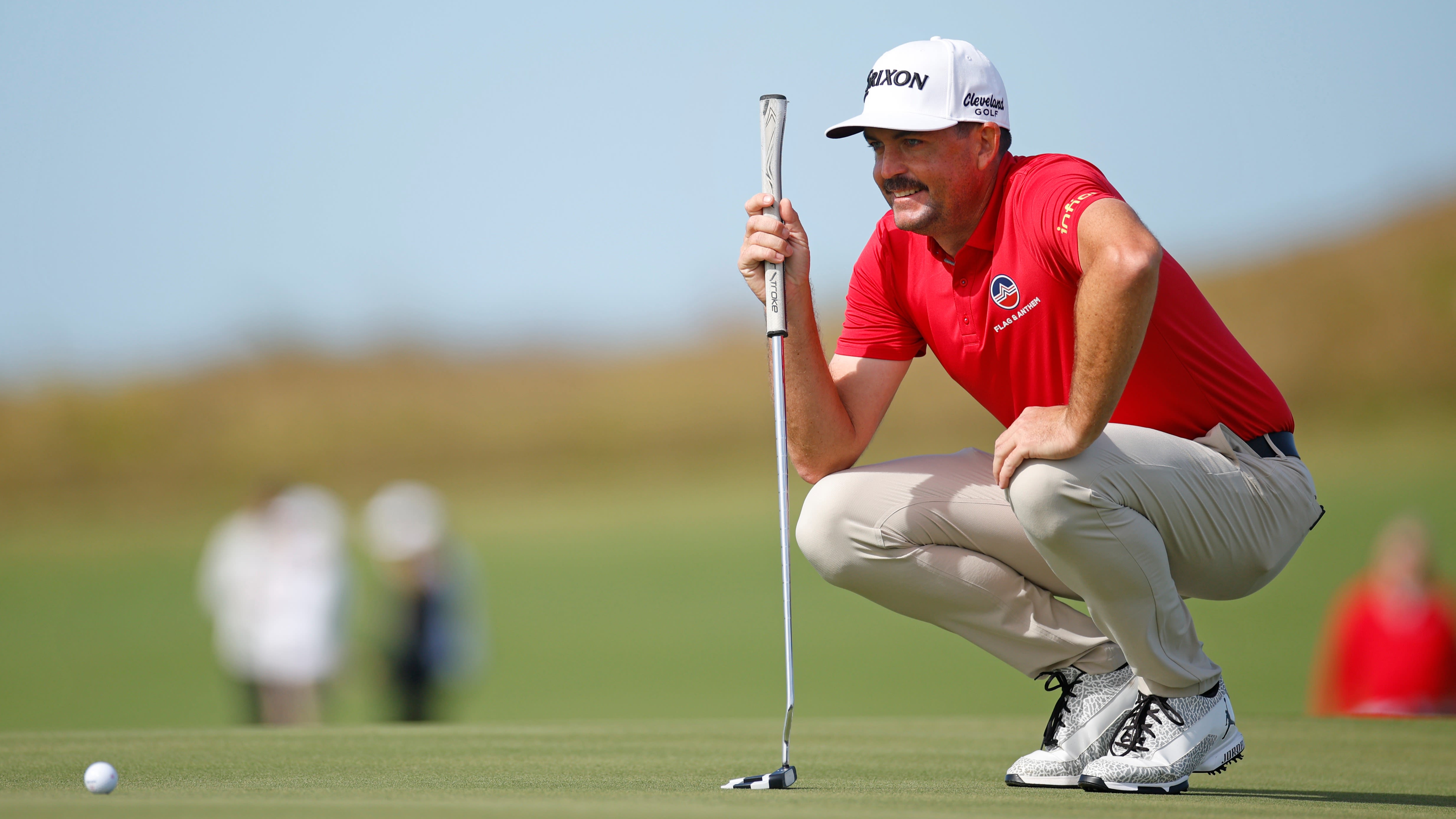
Keegan Bradley just pocketed $2.1 million at the revived Skins Game at Panther National, winning 11 skins and putting on an absolute clinic. The highlight? A stuffed 5-iron to 10 feet on the par-3 13th that earned him four skins and $900,000, the most valuable single skin in the event's history.
But here's what most people missed while watching Keegan dominate: the secret weapon hiding in plain sight during his pre-shot routine.
If you watch closely, you'll see Keegan place his hand on his belly before shots. It's not superstition. It's not some quirky habit. It's a deliberate reminder to breathe with intention, a technique he's been working on with performance coach Andy Matthews.
And after nearly three decades in this industry, I can tell you with absolute certainty: this might be the most underrated skill in golf.
The Gap Between the Range & First Tee
We've all been there. You're striping it on the range, flushing irons, rolling putts pure. Then you get to the first tee with a scorecard in your pocket, and suddenly your body feels like it belongs to someone else. Tight grip. Quick tempo. Shallow breathing.
Your swing didn't change. Your state did.
Andy Matthews, who now coaches some of the biggest names in golf, including Jordan Spieth, Bryson DeChambeau, and Keegan Bradley, spent ten years as a professional golfer watching this exact gap destroy his dreams. He had the talent, the work ethic, and the coaching. But when it mattered most, his body betrayed him.
The breakthrough came when he finally learned to breathe properly. Not just deeper. Not just slower. But with precision and measurable impact on his nervous system.
The next season, he went from barely keeping his tour card to finishing top 10 on the Order of Merit. The year after that, he won.
"Most players don't need to change their swing," Matthews told me for an article I did on him for Athlon Sports earlier this month. "They need to change their state."
Why Breathing Actually Matters
Here's the science without the jargon: under pressure, your body automatically shifts into fight-or-flight mode — heart rate spikes. Muscles tighten. Your rhythm gets disrupted. All the technical work you've done goes out the window because your physiology is working against you.
Proper breathing flips that switch back toward balance and control.
This isn't some feel-good mindfulness exercise. Matthews uses a device called the NTEL BELT that measures breathing patterns and heart rate variability in real time. Players can literally see how their breathing affects their stress response. When they breathe rhythmically and intentionally, the data shows their nervous system calming down.
That's when the magic happens. That's when practice performance shows up in competition.
Watch Keegan place his hand on his belly before a shot. He's checking in with his diaphragm, making sure he's breathing from the right place. It's a physical anchor that keeps him connected to the process that allows his talent to show up.
The Technique That Changed Everything
So how do you actually do this?
Here's what I've learned from researching Matthews' work and his introducing it to players on the Winter Park (FL) Boys Varsity Golf Team, who I assisted this past season:
Start with awareness. Most golfers have no idea how they're breathing under pressure. Next time you're on the course, pay attention. Are you holding your breath over putts? Taking quick, shallow breaths on the tee? That's your body telling you it's in stress mode.
Practice diaphragmatic breathing. Place your hand on your belly, just like Keegan does. When you breathe in, your belly should expand. When you breathe out, it should contract. If your shoulders are rising and falling, you're breathing from your chest, which actually increases stress.
Build it into your routine. The key is making this automatic. Before every shot, take two or three intentional breaths. Feel your belly expand. Feel the air move through your body. This isn't wasted time. This is the work that allows everything else to function.
The beautiful thing about breathing work is that it doesn't replace anything you're already doing. It enhances everything. Your swing coach's technical work. Your short game practice. Your course management. All of it works better when your nervous system is regulated.
One of Matthews' college golfers sent him a text that perfectly captures the universal application: "I used my golf breathing for my chemistry final, and I did better than I thought."
That's the real power here. You're not just learning to play better golf. You're learning to perform better under any kind of pressure.
Your Next Step
The next time you practice, spend ten minutes just working on your breathing. No balls. No swing thoughts. Just you, your breath, and your awareness of how your body responds.
Then take it to the course. Before every shot, place your hand on your belly like Keegan does. Take two intentional breaths. Feel your body settle.
You might not win $2.1 million. But I guarantee you'll start closing the gap between your practice performance and your competitive results.
PGA of America Golf Professional Brendon Elliott is an award-winning coach and golf writer. Read his recent “Playing Through” on R.org and his stories on Athlon Sports. To stay updated on his latest work, sign up for his newsletter and visit OneMoreRollGolf.com.