 Golf Travel
  Leaderboards
  Become a Member
  Shop
Shop  Trade In
 Beginner
Nelly Korda’s Smart Golf Secrets: 3 Easy Tips for All Handicaps to Play Smarter and Score Lower
By Brendon Elliott, PGA
Published on
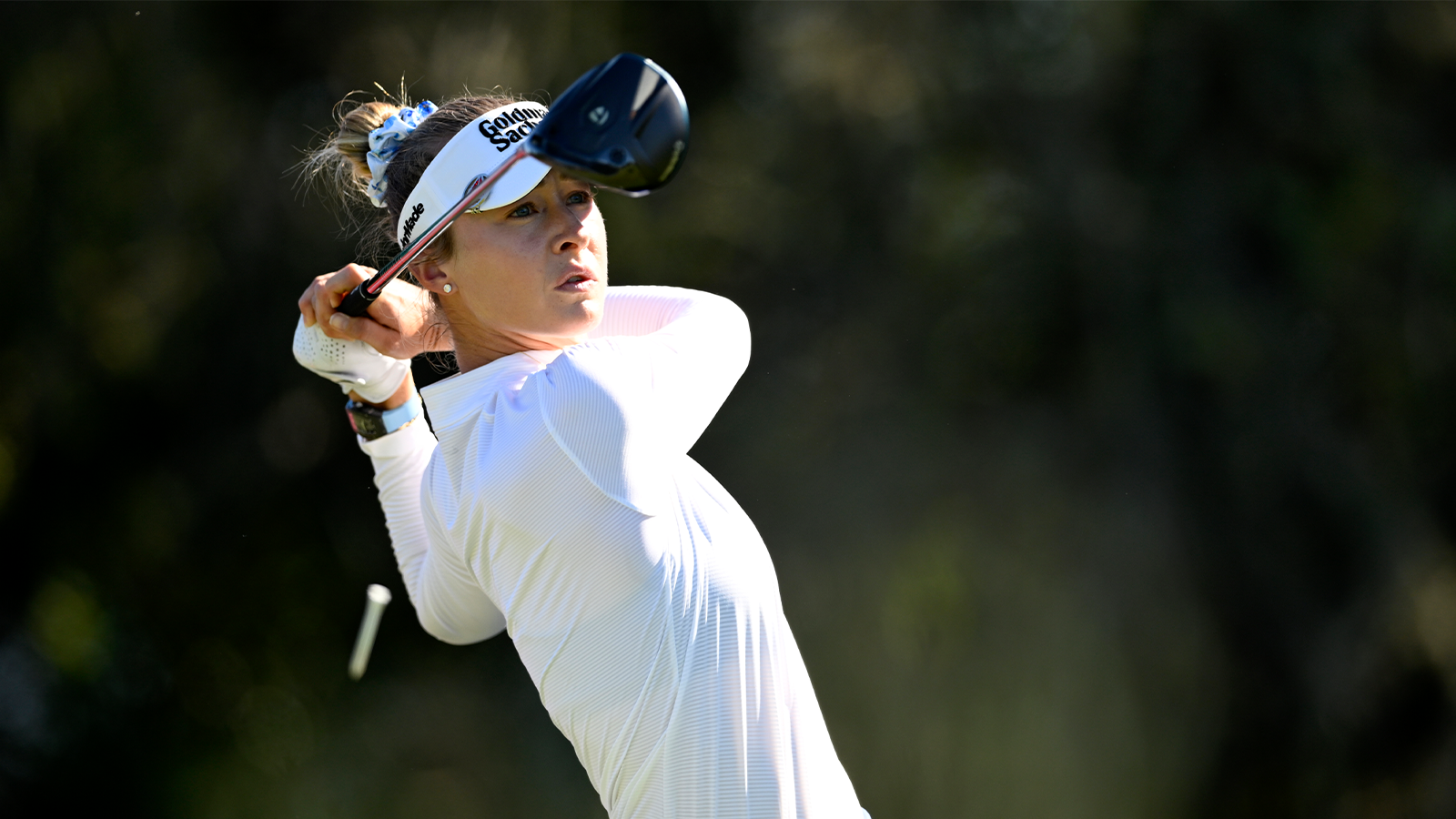
Through 36 holes at the Founders Cup, Nelly Korda’s stat line looked like what you would expect from one of the best players in the world: 21 of 28 fairways hit, 30 of 36 greens in regulation, 282.0 yards of average driving distance, and 63 putts. But the most useful part of her week was not just the numbers. It was the way she talked about getting them.
Korda described Sharon Heights as “tricky,” said she “backed down off driver a couple times,” and explained that on this golf course “you kind of have to work it both ways.” Earlier in the week, she called it “very demanding off the tee,” with tight corridors, no first cut and penal bunkers. That is the stuff regular golfers should pay attention to, because that is real golf. It is not just about talent. It is about decisions, discipline and being ready for the shot the course actually asks for.
Here are three Nelly-inspired takeaways golfers of any level can bring to their own games right now.
Tip 1: Stop Treating Every Tee Shot Like a Long Drive Contest
One of the most telling things Korda said after two rounds was that she backed off the driver and hit a 3-wood in spots. That may sound simple, but it is one of the hardest things for amateur golfers to do. Too many players walk onto a tee box, pull the driver automatically and hope the swing matches the decision. Korda did the opposite. She let the hole tell her what club to hit. That is grown-up golf.
On a course she called demanding off the tee, she still found 21 fairways in 28 tries. That is not accidental. That is commitment to position first and aggression second.
For a low-handicap player, this means building a true tee-shot plan. Before the round, identify the holes where a 3-wood, hybrid or even long iron gives you a better angle and removes one side of the golf course. Your assignment is simple: choose the club that leaves your next shot from grass, not the one that wins the distance contest.
For a mid-handicap player, make one rule for the next round: if trouble pinches both sides of the landing area, the driver stays in the bag. Pick the club you trust most to start on a good line. You will be amazed at how often one smart layback leads to a stress-free bogey at worst and a sneaky par at best.
For a high-handicap player, forget yardage for a minute and prioritize contact and playability. Hit the club that gives you the best chance to advance the ball in play. A 185-yard shot from the fairway is always better than a 230-yard guess from the trees.
Tip 2: Learn to Play the Shot the Hole Demands
Korda said Sharon Heights is not draw-biased or fade-biased. In her words, “you kind of have to work it both ways here.” That matters because a lot of golfers try to force the same ball flight on every hole. Better players understand that some holes want a certain shape, a certain window and a certain landing area. Golf gets easier when you stop fighting the architecture.
This does not mean every golfer needs to become a shotmaker overnight. It does mean every golfer should learn how to adjust setup, aim and intention enough to move the ball a little when the hole asks for it. Even a small shape is useful.
For a low-handicap player, spend one practice session each week hitting stock fades and stock draws with the same club. Not huge curves. Just playable, repeatable shapes. Then, on the course, commit to the shape that fits the hole instead of defaulting to your favorite look every time.
For a mid-handicap player, work on a go-to curve and an emergency curve. Maybe your stock shot is a fade. Fine. Now learn one gentle draw for the handful of holes where a fade brings trouble into play. That one extra shot can save two or three shots a round.
For a high-handicap player, start smaller. You do not need to bend it like Nelly. Just learn how ball position and alignment influence starting direction. Practice three balls in a row: one starting left of the target, one at the target and one starting right. That alone will help you understand how to fit tee shots into tighter holes.
Tip 3: Build Your Game Around Routine, Fitness and Patience
One reason Korda comes back sharp after time off is that she does not really disappear from the work. She said she spent her break in the gym, practiced, put in work with her coach and focused on routine. She also talked about eating clean and training like an athlete, not just a golfer. That is a great reminder that consistency is built long before the first tee.
The other part of this is patience. Korda admitted she had missed putts inside 10 feet that she thought would break one way and went the other. In other words, even the best players hit good putts that do not behave exactly as expected. That is golf. The lesson is not to panic. The lesson is to stay with your process.
For a low-handicap player, build a weekly system. Two focused range sessions, one short-game session and two strength or mobility sessions. Nothing fancy. Just something repeatable. Good golf loves structure.
For a mid-handicap player, make your pre-shot routine identical on every full swing and every short putt. Same look, same breath, same trigger. When the pressure rises, routine keeps the mind from wandering.
For a high-handicap player, start with two non-negotiables: 10 minutes of balance or mobility work three times a week and 25 short putts from three to five feet after every practice session. You do not need more information. You need better habits.
The Real Lesson from Nelly
What stands out most about Korda through 36 holes is not that she is talented. We already knew that. It is that her golf looks disciplined. She is not trying to overpower a course that asks for restraint. She is not stubbornly forcing one pattern. She is not pretending that preparation does not matter.
That is the part the rest of us can borrow.
Pick smarter clubs off the tee. Learn how to fit your shot to the hole. Build a routine sturdy enough to hold up when your swing does not feel perfect.
That may not turn you into Nelly Korda. But it will absolutely make you harder to beat.
PGA of America Golf Professional Brendon Elliott is an award-winning coach and golf writer. Read his recent “The Starter” on R.org and his stories on Athlon Sports. To stay updated on his latest work, sign up for his newsletter and visit OneMoreRollGolf.com.


