Golf Travel
  Leaderboards
  Become a Member
  Shop
Shop  Trade In
 Course Spotlight
Discover Innisbrook Resort: One of Florida’s Best All-Around Golf Getaways
By Brendon Elliott, PGA
Published on
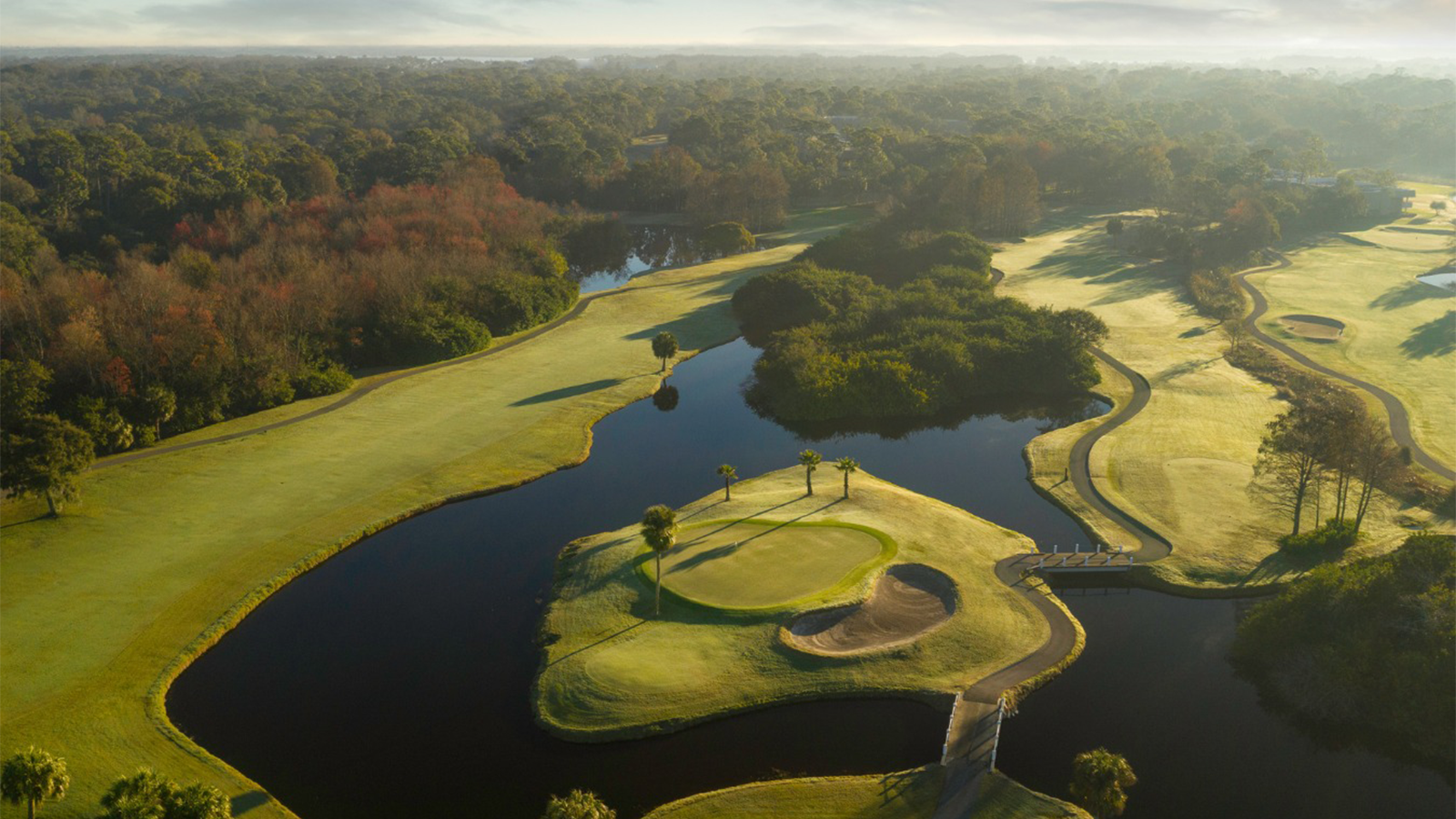
Every spring, Innisbrook Resort takes its turn in the PGA TOUR spotlight as host of the Valspar Championship. But this Palm Harbor property is much more than a one-week tournament venue. Located roughly half an hour from Tampa International Airport, Innisbrook has long been one of Florida’s true golf destinations, a place where the resort side and the golf side actually feel connected.
The property offers the kind of full golf getaway players want, with multiple courses, lodging, dining, pools, and plenty of room to settle in for a few days. Still, what has always made Innisbrook stand out is that it feels less like a glossy resort product and more like a place built for people who genuinely love golf.
And while the resort has depth, one course has long been the star of the show: Copperhead.
The Course That Became the Headliner
Copperhead emerged in the early 1970s as the second of Innisbrook’s four courses, and over time it became the layout most closely associated with the property. That did not happen by accident. It has championship quality, but it wears that identity in a subtle way.
Before it became the home of the PGA TOUR event now known as the Valspar Championship, Copperhead had already built tournament credibility. It hosted the JCPenney Classic in the 1990s, giving the course a strong competitive history well before today’s players arrived each March. Since 2000, it has served as the home of this event, and in that time it has become one of the most respected non-major tests on the schedule.
That reputation has lasted because Copperhead does not rely on theatrics. It simply asks players to hit shots.
Not Your Typical Florida Layout
What makes Copperhead so memorable is that it barely feels like the stereotypical Florida course.
Designed by Larry Packard, the layout moves through corridors of pine trees and rolling terrain, with elevation changes and movement that are unusual in a state better known for flatter, more exposed golf. Instead of broad, open fairways framed by palms and water, Copperhead has shape, texture, and a natural rhythm to it.
Packard believed in working with the land rather than forcing it into something artificial, and that design philosophy still shows. Fairways bend naturally. Approach angles matter. The bunkering is strategic rather than decorative. The greens ask questions without crossing into tricked-up territory.
That is one reason the course has such staying power. Copperhead has personality, but it is an honest kind of personality. It challenges players without ever feeling like it is trying too hard.
The Story Behind the Name
The Copperhead name sounds like a direct nod to the snake, and over the years the course has certainly embraced that identity. But one of the more interesting bits of resort lore is that the name may have been inspired by copper pennies reportedly found during construction.
Whether that story is perfect fact or simply part of the property’s long-running charm, it fits. Copperhead has fully leaned into the snake theme, especially where it matters most: the closing stretch.
At a tournament where pressure is already high, players head home on holes with names that sound more like warnings than labels.
The Snake Pit Still Has Bite
Holes 16, 17, and 18 are known collectively as the Snake Pit, and it remains one of the toughest closing stretches in golf.
The par-4 16th, called Moccasin, demands precision and commitment. The par-3 17th, Rattler, is one of those holes that can look manageable until the pressure shows up. Then comes the finishing 18th, Copperhead, where one more accurate tee shot and one more fully committed approach are usually required to close the job.
It is a finish that does exactly what a great tournament finish should do: create tension. Players cannot coast through it. Leaders cannot relax. Chasers know they still have a chance if someone slips.
That is a big reason the Valspar Championship tends to deliver. Copperhead does not hand anything away late. If a player wins here, he usually earns every bit of it.
What Players Are Facing This Week
This week, Copperhead is set up at 7,352 yards and plays to a par of 71. The greens are poa trivialis overseed, while the collars, approaches, tees, fairways, and rough are all ryegrass overseed. The course features average green sizes of 5,822 square feet, 74 bunkers, and water in play on nine holes.
One number that says plenty about the challenge is the average fairway width: just 20 yards. That tells you right away that Copperhead is not only about surviving the Snake Pit or producing a few dramatic moments on Sunday. It is a positional golf course. Players have to think their way around it, drive it with discipline, and place the ball in the right sections of the course if they want to control the tournament.
There is also new bunker sand in place this year, another small but telling reminder that tournament preparation at a place like this comes down to details. Copperhead may not always scream for attention visually, but it has a way of exposing any weakness in a player’s game.
More Than a One-Course Property
While Copperhead gets the attention, the rest of Innisbrook deserves a nod as well.
The Island Course has long been regarded as a serious test in its own right. The South offers a different look and feel, and the North adds another layer to the resort’s golf lineup. That matters because Innisbrook is not a place built around one famous course and little else. It is a genuine multi-course golf destination with real depth.
Copperhead just happens to be the course that carries the biggest reputation.
Why Copperhead Endures
In an era when some tournament courses can feel built more for branding than for golf, Copperhead still feels refreshingly true to itself. It is not flashy. It is not gimmicky. It is simply strong.
It rewards patience, precision, solid ball-striking, and smart decision-making. It asks players to shape shots, manage misses, and stay mentally sharp. And for fans, it gives back exactly what a good championship venue should give back: drama that feels earned.
That is why Copperhead continues to stand out. Not just in Florida, but across the PGA TOUR schedule as a whole.
PGA of America Golf Professional Brendon Elliott is an award-winning coach and golf writer. Read his recent “The Starter” on R.org and his stories on Athlon Sports. To stay updated on his latest work, sign up for his newsletter and visit OneMoreRollGolf.com.