Golf Travel
  Leaderboards
  Become a Member
  Shop
Shop  Trade In
 quick coaching
Scottie Scheffler Is Still Scottie. His 61 Offers One Lesson Every Golfer Needs.
By Brendon Elliott, PGA
Published on
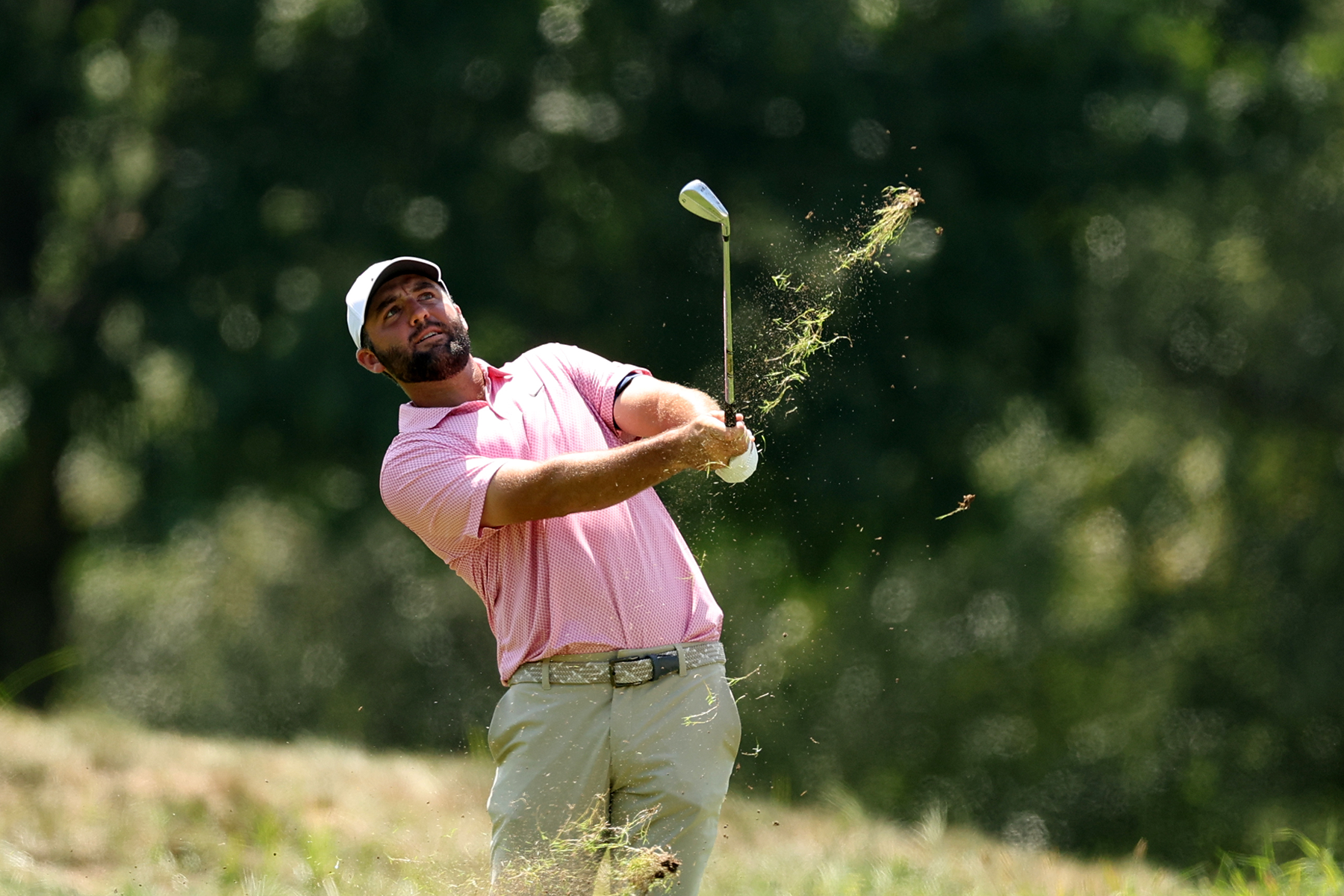
Scottie Scheffler has not gone anywhere. The questions have come only because the standard he created is almost unreasonable.
One win in 2026 may sound modest by Scheffler’s standards, but he arrived at TPC Southwind ranked No. 1 in the FedExCup standings and No. 1 in the world. That is hardly a player searching for his game.
Then Friday happened. Scheffler birdied his first five holes and shot a 9-under 61, tying the course record and moving to 11 under through 36 holes at the FedEx St. Jude Championship.
The most useful coaching lesson, however, began one day earlier. Scheffler hit 17 of 18 greens Thursday but shot “only” 68. He hit 14 greens Friday, when the putter caught fire and the score finally looked like the Scottie Scheffler we have come to expect.
That two-round sequence gives everyday golfers a much better way to judge their own games.
Do Not Let the Score Grade Every Part of Your Game
Through 36 holes, Scheffler had hit a field-best 31 of 36 greens. He ranked third in Strokes Gained: Approach and third in Strokes Gained: Putting. During the second round alone, he led the field in both categories, gaining 3.479 strokes with his approach play and 3.868 strokes on the greens.
Those numbers tell two connected stories. Scheffler kept creating chances, then converted more of them Friday.
Golfers often lump those jobs together. If the score disappoints, they assume the entire game was poor. I see players hit plenty of greens, make very little and leave the course convinced their swing failed them. Others hole several putts, overlook shaky ball-striking and assume everything is fixed.
Neither conclusion is especially useful.
Approach play creates the opportunity. Putting converts it. They influence the same score, but they should be measured separately. Scheffler’s opening 68 was not evidence that his iron play had disappeared. Seventeen greens said quite the opposite.
When I review a round with a student, I want more than the final score and a list of the worst shots. We look for the skill that repeatedly created scoring chances and the skill that prevented those chances from becoming a lower number. That distinction keeps one frustrating afternoon from turning into an unnecessary swing overhaul.
Try the Create-and-Convert Test
This is one 24-shot practice test with two scores. It helps identify where your next block of practice time should go.
Part 1: Create
Hit 12 approach shots to a green or a clearly defined green-sized target on the range. If there is no target green, use two flags or landmarks roughly 25 to 30 yards apart as the edges.
- Hit four balls with a short iron, four with a midiron and four with the longest club you regularly use for an approach.
- Change targets after every shot. This keeps you from correcting the previous swing and turning the test into a ball-beating session.
- Set the clubface to the intended starting line first, then build your stance around it. Make one rehearsal, step in and hit the shot.
- Award one point only when the ball finishes inside the target area. Record your score out of 12.
Use your normal stock shot and a pace you would trust on the course. Hold your finish until the ball lands so hurried swings are easy to recognize. Do not stop to diagnose mechanics during the test. You are collecting evidence. If eight balls miss predominantly short, left or right, that pattern becomes useful information to share with your PGA Coach.
Part 2: Convert
Take one ball to the putting green and hit 12 putts: four from 5 feet, four from 7 feet and four from 9 feet.
Move to a different location after every putt. Read each one, choose a starting line and set the putter face before arranging your feet. Every putt counts. No second attempts.
Your total makes become the conversion score. Beside every miss, jot down short, long, left or right. That tiny detail matters. Four misses do not necessarily point to the same problem, and the pattern tells you whether your next session should emphasize pace or starting line.
Do not combine the putting total with the approach score. After three sessions, you will have an honest baseline for both parts of your scoring game.
Let the Evidence Choose the Practice
The value of the test is not beating somebody else’s number. It is knowing your own.
If your create score falls below its three-session average, spend the next practice working on the club or miss pattern that cost you the most opportunities. If the conversion score drops, work from the distance where the misses piled up. When both numbers hold steady but one round produces a disappointing score, resist the urge to rebuild anything.
Use the same idea on the course. For your next three rounds, track greens in regulation and putts made versus attempted from 5 to 9 feet. Those two numbers will tell you more than a frustrated walk from the 18th green ever will.
Scheffler’s 61 looked like a return to dominant form. His 68 already contained plenty of it. He created chances Thursday. On Friday, he created and converted them.
That is the lesson. Measure what is working, practice what is not and never tear apart a functioning golf swing simply because the putts did not fall on schedule.
PGA of America Golf Professional Brendon Elliott is an award-winning coach and golf writer. Read his recent “The Starter” on R.org and his stories on Athlon Sports. To stay updated on his latest work, sign up for his newsletter and visit OneMoreRollGolf.com.