Golf Travel
  Leaderboards
  Become a Member
  Shop
Shop  Trade In
 quick coaching
Solheim Cup Swing Analysis: Key Lessons from Charley Hull and Nelly Korda
By Ryan Adams, PGA
Published on
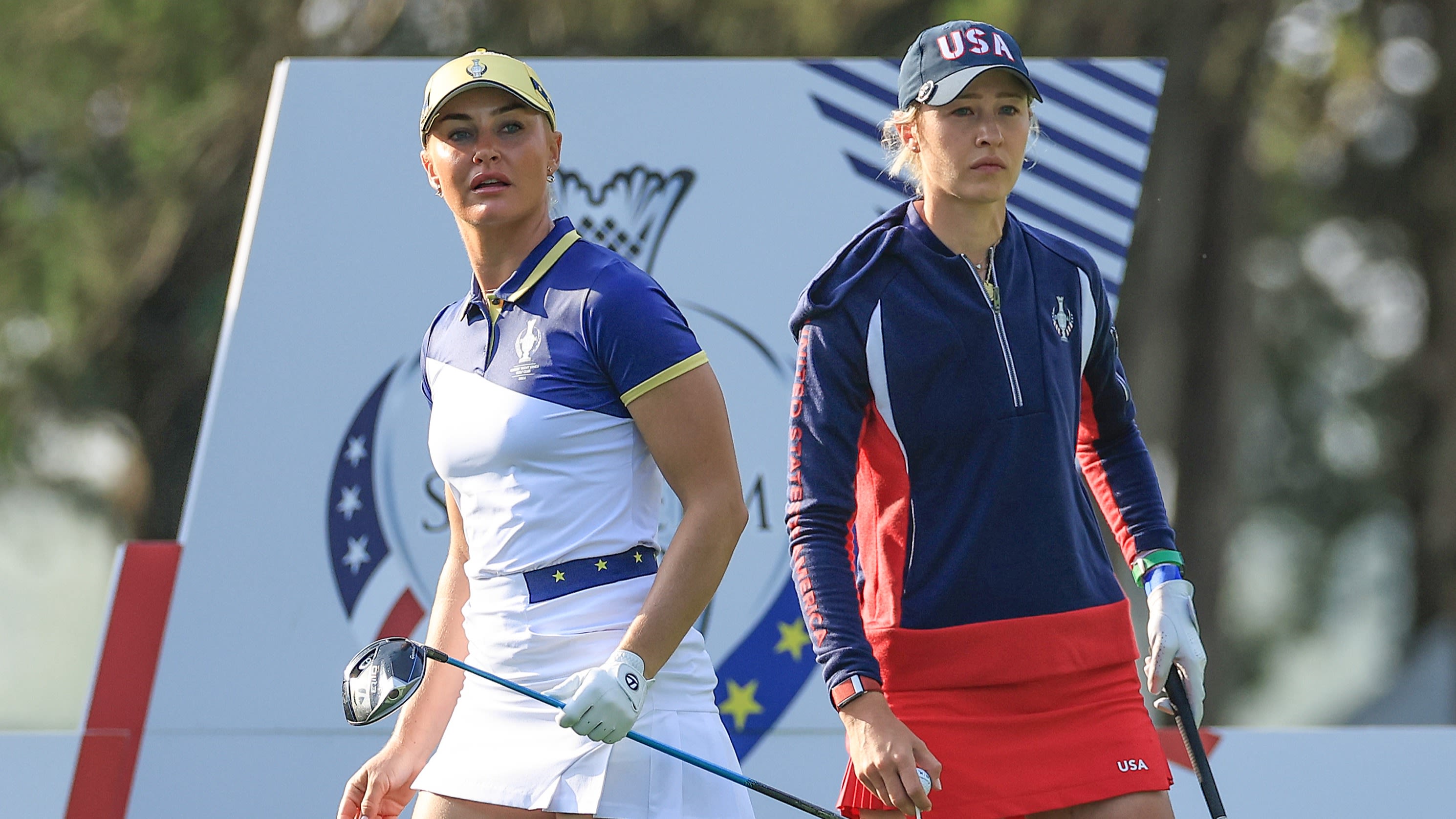
With the Solheim Cup underway, Team Europe's Charley Hull and Team USA's Nelly Korda present two of the most distinct, world-class golf swings on the LPGA Tour. Breaking down their mechanics offers amateur golfers clear, actionable blueprints to correct common flaws like slicing, poor contact, and limited clubhead speed.
Quick Takeaway:
- To Fix a Slice: Match your clubface to your spine angle at takeaway (Charley Hull) or extend your hand path deeper behind your back heel at the top (Nelly Korda).
- To Gain Distance: Elevate your trail arm at the top of the backswing to widen your swing arc (Nelly Korda).
Charley Hull: Clubface Control & Dynamic Body Separation
European powerhouse Charley Hull relies on exceptional clubface control and upper-to-lower body separation during transition to hit long, controlled shots.
- Square Clubface Alignment: At shaft parallel during the takeaway, Hull’s clubface directly matches her spine angle. Slicers often roll the clubface open here; keeping the club toe pointing slightly toward the ground ensures better face control.
- Controlled Hip Turn: Hull maintains knee flex without over-extending her trail leg on the backswing. This restricts excessive hip depth while building a stable base.
- Upper and Lower Body Separation: In the downswing transition, Hull fires her lower body target-side while keeping her chest turned back. This disassociation clears space and generates explosive power.
- Punch Shot Trajectory Control: In windy conditions, Hull utilizes an abbreviated follow-through to maintain a low, controlled ball flight.
Nelly Korda: Deep Hand Path & Trail Arm Elevation
American star Nelly Korda demonstrates a wide, powerful swing motion using structural mechanics that eliminate steep, over-the-top downswings.
- Deep Hand Path Alignment: At the top of Korda's backswing, a vertical line drawn down from the butt of the club points directly behind her back heel. Amateur slicers often push the club butt over their toes due to a weak turn, causing an out-to-in swing path.
- Trail Arm Elevation: Rather than pinning her trail arm tightly against her ribs, Korda lifts her tricep off her ribcage until her humerus is parallel to the ground. This elevation widens the swing arc, adds hand path depth, and boosts overall clubhead speed.
LPGA Golf Swing Mechanics Comparison
Swing Feature | Charley Hull (Europe) | Nelly Korda (USA) | Amateur Swing Takeaway |
Clubface Alignment | Matches spine angle at shaft parallel | Square/Closed through impact | Stops rolling the clubface open, eliminating slices. |
Hand Path Depth | Compact and centered over base | Butt of club aligned over back heel | Prevents steep, over-the-top downswings. |
Trail Arm Position | Connected through transition | Tricep lifted; humerus parallel to ground | Creates width and leverage for higher speed. |
Finish Position | Abbreviated finish for low punch shots | Full, balanced high extension | Adjusts launch angle based on weather conditions. |
Frequently Asked Questions
How does Nelly Korda get so much power in her golf swing?
Nelly Korda generates effortless distance by creating maximum swing width. She lifts her trail tricep off her ribcage at the top of her backswing, widening her swing arc and extending her hand path deep behind her back heel.
How do I stop rolling the clubface open on the backswing?
To fix an open clubface, follow Charley Hull's takeaway check: at shaft parallel, ensure the clubface angle matches the angle of your spine, with the toe pointing slightly down toward the ground rather than up to the sky.