quick coaching

What Tommy Fleetwood's Performance in India Teaches Us About Having Fun Under Pressure
By Brendon Elliott, PGA
Published on

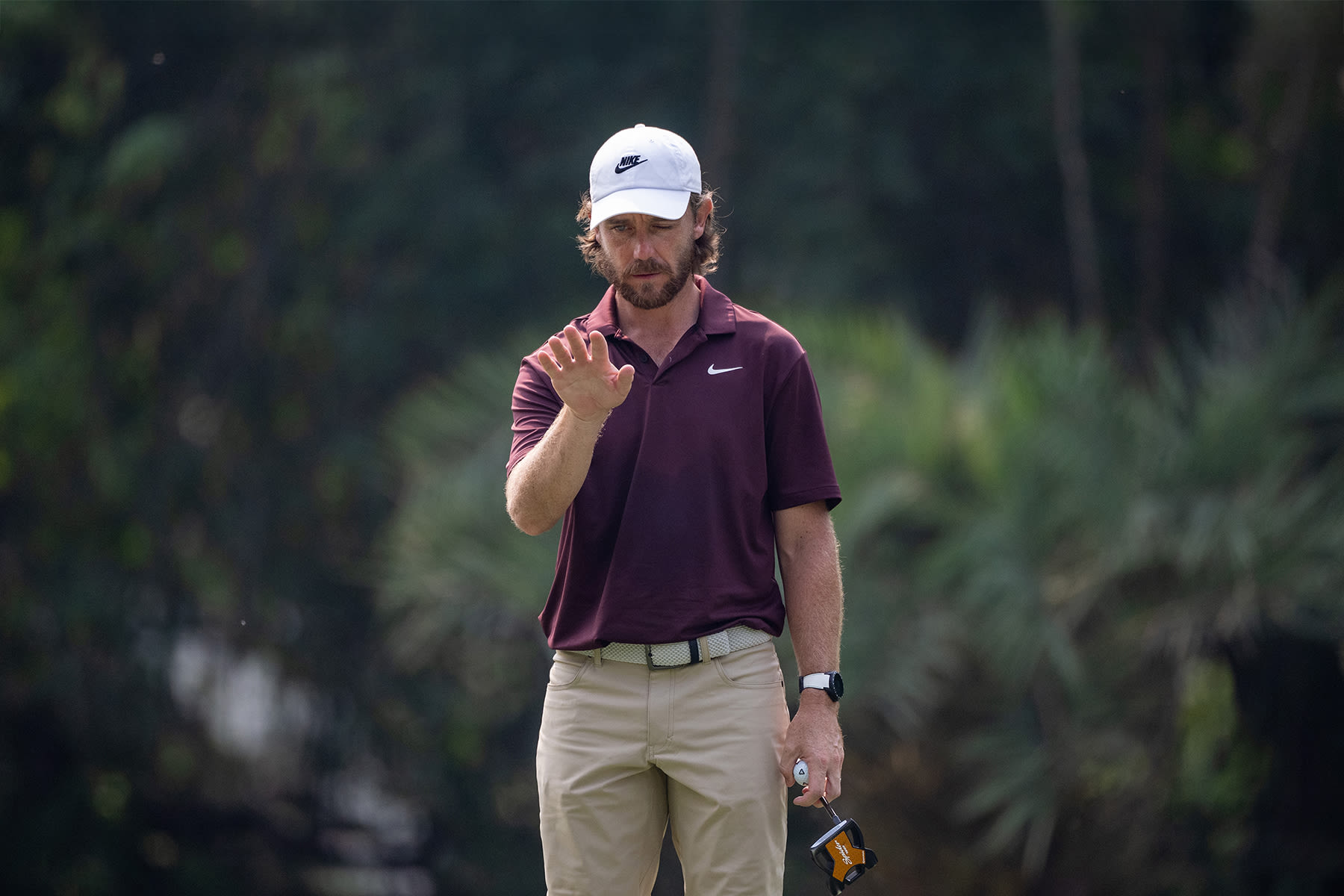
Tommy Fleetwood's performance at the DP World India Championship tells you something most golf instruction misses entirely. After posting a flawless 64 in the second round to grab the halfway lead at 12 under, he didn't talk about swing mechanics or equipment tweaks. What mattered? Playing alongside Luke Donald and Shane Lowry, two fellow Ryder Cup teammates, and actually enjoying himself.
"Unbelievable three-ball," Fleetwood said. "I think because you're so comfortable with each other, you do your own thing. It's always like a bonus when you're with two guys that you're really close with. It has been a great two days."
I see this pattern constantly with my students. They stripe it on the range. They play loose and confident with friends on Saturday mornings. Then competition shows up. A club championship. A work outing with something on the line. Even a casual match where pride's at stake. And everything changes. The effortless swing turns robotic. Natural confidence becomes something they have to manufacture.
Fleetwood's bogey-free round with eight birdies proves you don't have to trade enjoyment for performance. Actually, it's often the opposite. Let me give you three ways to bring that practice-range freedom into moments that matter.
Tip 1: Reframe Competition as Connection
The Tip: Make it your job to enjoy whoever you're playing with, no matter what's on the line.
Why It's Important: Fleetwood singled out his comfort level with Donald and Lowry. He noted that being around people you're close with lets you "do your own thing." His competitive edge didn't disappear because he was having fun. It sharpened. When you treat other players like adversaries, you create tension that seeps into everything you do.
How It Works: Your nervous system can't tell different kinds of stress apart. Social anxiety produces the same performance-killing cortisol that score anxiety does. Meanwhile, genuine connection releases oxytocin and dopamine. These actually help with motor control and decision-making.
Action Item: Next competitive round, set yourself two goals. Learn something new about each person you're paired with. Give at least one genuine compliment per player. This pulls your attention outward and builds the kind of ease that lets your real swing show up.
Tip 2: Embrace the Challenge as Enjoyment
The Tip: Say out loud what you find enjoyable about tough conditions or difficult situations.
Why It's Important: Fleetwood called Delhi Golf Club "such a unique challenge" and described it as "very, very enjoyable" despite its difficulty. He talked about the patience it demanded and said, "It's been a great test." This matters because resisting difficulty creates a mental trap. Reframing it as something you welcome keeps that trap from closing.
How It Works: Label something "difficult" in a negative way, and your brain reads it as danger. It activates your fight-or-flight response. Muscles tighten. Focus narrows. Call that same difficulty an "enjoyable challenge," and you keep access to your prefrontal cortex, where strategic thinking lives.
Action Item: Before you tee off, write down three challenges the course throws at you. Then note why each one interests you or seems fun. Maybe: "These firm greens reward precise distance control, which I've been working on." Or: "Narrow fairways make me really commit to my target." When you face these situations during your round, remind yourself why you found them interesting in the first place.
Tip 3: Trust Your Preparation and Let Go
The Tip: Build a specific moment into your pre-shot routine where you consciously let go and trust what you've practiced.
Why It's Important: Fleetwood said he "wasn't happy with how I hit it towards the end yesterday." So he hit balls afterward and felt his swing was "in a better place" the next day. He prepared, then trusted the preparation. Most golfers do the work but never give themselves permission to trust it when it counts. They keep trying to perfect things during competition instead of just executing.
How It Works: The complex motor patterns in your golf swing live in your subconscious. That part of your brain works best when your conscious mind gets out of the way. Think about walking downstairs. You do it perfectly until you start thinking about each individual step. Competition triggers overthinking, which interferes with the automatic processes you've built through practice.
Action Item: Add a "release" moment to your routine. After your practice swing, take one breath, say a word like "trust" or "free," and commit to letting your body do what it knows. If you catch yourself steering or controlling mid-swing, don't beat yourself up. Note it. Recommit to your release word next time.
Freedom Like Fleetwood
Tommy Fleetwood's performance in India is a reminder. Peak performance doesn't require you to stop enjoying yourself. Often, it requires exactly the opposite. He said this about potentially playing with Shane Lowry for the final two rounds: "I feel like if I'm playing with Shane for the next two days, I'll be doing something right probably."
That's how champions think. They find joy in the process, even when leading a tournament. Try bringing that same mentality to your next competitive round. You might find your scores improve the moment you stop forcing them to.

PGA of America Golf Professional Brendon Elliott is an award-winning coach and golf writer. Read his recent “Playing Through” on R.org and his stories on Athlon Sports. To stay updated on his latest work, sign up for his newsletter and visit OneMoreRollGolf.com
Brendon R. Elliott, PGA

Sorrento, FL

Brendon Elliott

Director of Instruction, Freelance Golf Writer

[Brendon Elliott, PGA](https://brendonelliott.com/), is an award-winning PGA Professional, player-development coach and nationally recognized golf writer with three decades of experience in the golf industry. As of 2026, he has been a PGA Professional for 17 years and has earned more than 25 PGA Section and Chapter honors for his work in coaching, education and player development. In 2017, he received the PGA of America National Youth Player Development Award. ## Coaching Competitive Teenage Golfers Through [BE A GOLFER](https://beagolfer.golf/home), Brendon specializes in working with competitive teenage golfers who want to improve their performance, better understand their games and prepare for the demands of high school, junior tournament and college golf. His primary focus is [Remote Coaching](https://beagolfer.golf/remote-coaching), which allows him to remain actively involved in a player’s development regardless of location. Rather than relying on occasional lessons or isolated swing fixes, Brendon works with players throughout their competitive journey. His coaching covers much more than the golf swing. Players receive ongoing guidance in structured practice, short-game development, putting, course management, tournament preparation, performance analysis, goal setting and the mental and physical habits required to improve over time. Using video analysis, virtual coaching sessions, performance data and regular communication, Brendon helps each player understand what to work on, why it matters and how to make meaningful progress between practices and tournaments. Brendon accepts only a limited number of in-person students in Central Florida. His priority is building long-term [Remote Coaching](https://beagolfer.golf/remote-coaching) relationships with competitive teenage golfers and their families. The goal is not simply to help a young player hit better shots. It is to help that player become more prepared, more accountable and more capable of navigating everything competitive golf demands. Brendon’s career has included serving as a head golf professional, general manager, college golf educator, career development director, academy owner and longtime junior golf leader. He founded Little Linksters Golf Academy in 2008 and led the organization for more than 16 years before selling the academy in late 2024 and launching [BE A GOLFER](https://beagolfer.golf/home). ## Golf Writing and Media Brendon is also a nationally recognized and prolific golf writer and storyteller. He is the Senior Golf Writer for [Athlon Sports](https://athlonsports.com/author/brendon-elliott) and has written extensively about professional golf, instruction, player development, equipment, golf history and the people shaping the game. His work has also appeared with PGA.com, GolfWRX, PGA Magazine, MyGolfSpy and several other prominent golf media outlets. Through [One More Roll Golf Media](https://onemorerollgolf.com/), Brendon provides editorial content, feature writing, consulting and media services throughout the golf industry. His background as a coach and educator shapes the way he writes, while his work as a writer strengthens the way he coaches. He understands how to explain complicated ideas clearly, ask better questions and connect the technical, strategic and personal sides of golf.