Golf Travel
  Leaderboards
  Become a Member
  Shop
Shop  Trade In
 Course Spotlight
TPC Toronto North Course Breakdown: Key Holes, Strategy and Scoring Opportunities
By Brendon Elliott, PGA
Published on
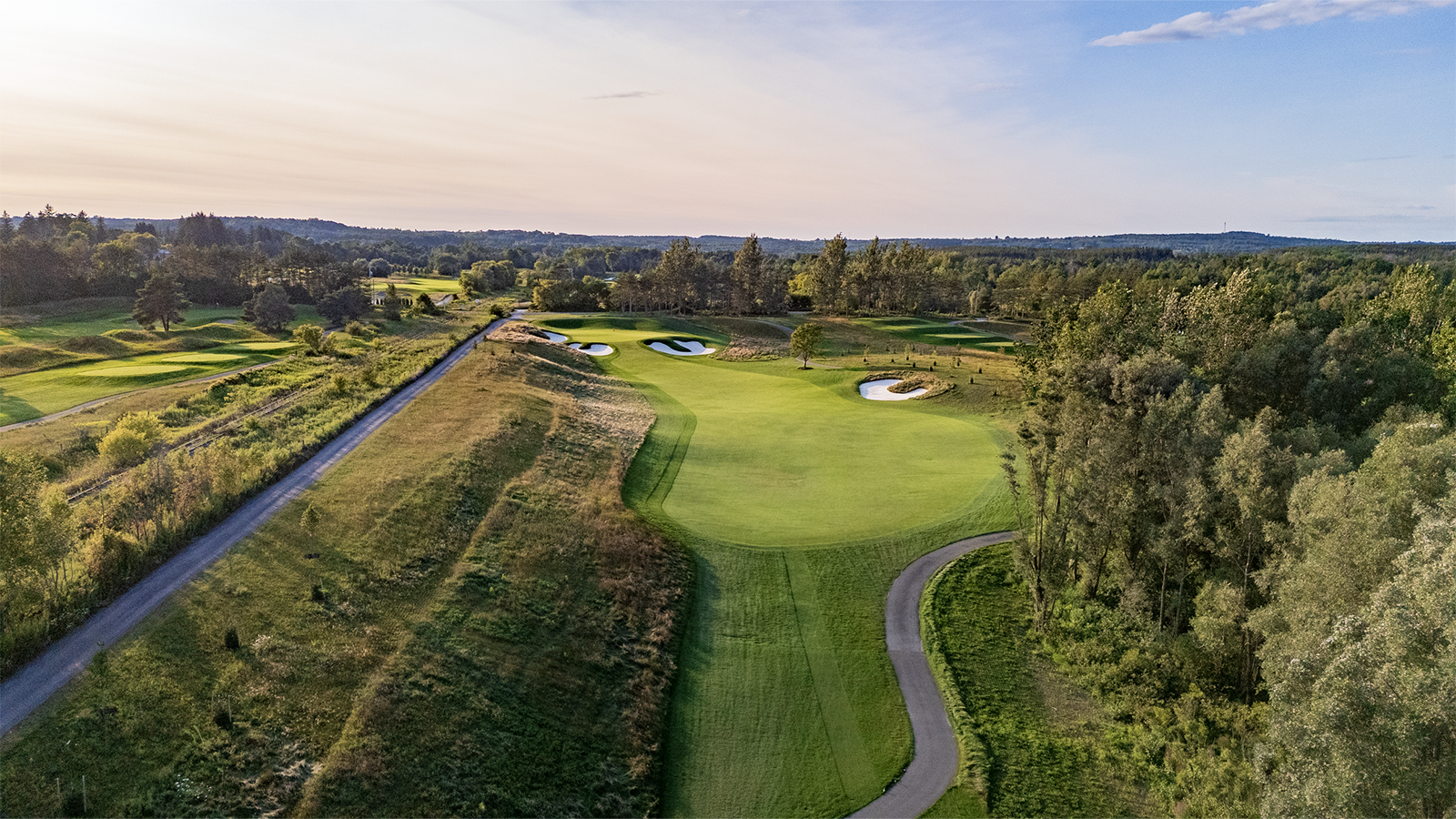
The RBC Canadian Open has one of the deepest histories on the PGA TOUR schedule. This week, that history returns to one of the tournament’s newest stages.
TPC Toronto at Osprey Valley’s North Course in Caledon, Ontario, hosts Canada’s national open for the second straight year, giving players another look at a venue that is quickly becoming an important part of the championship’s future.
This is not a classic Canadian Open venue in the old, tree-lined sense. It is not Glen Abbey, Hamilton or St. George’s. TPC Toronto is a modern, expansive, big-shouldered golf course built to test the best players in the world in a different way.
The North Course will play as a par 70 at 7,389 yards this week, with two par 5s, four par 3s and a closing stretch that can change the tournament quickly.
It has room off the tee, but it is not simply wide-open. It has length, but it is not only about power. The real test is how players manage angles, bunkers, green complexes and recovery areas across a course that asks for both modern ball speed and traditional shot control.
A Course Built for This Moment
The North Course was originally designed by Canadian architect Doug Carrick and opened in 2001. Carrick’s layout gave Osprey Valley a parkland-style course with generous corridors, natural movement and a sense of scale.
The next major step came when TPC Toronto joined the TPC Network in 2018, putting the property into a much bigger conversation around championship golf.
That conversation became reality with a major renovation led by Ian Andrew. The work began in 2023 and continued into 2024 as the North Course was prepared for PGA TOUR competition. The project included expanded greens, adjusted bunkering, new teeing grounds and strategic changes designed to elevate the course for elite players while preserving its playability.
That balance matters. A national open venue needs more than length. It needs identity, strategy and enough flexibility to remain interesting across four rounds.
TPC Toronto now has that.
It hosted the RBC Canadian Open for the first time in 2025, will do so again this week and is also scheduled to host in 2027. That gives the North Course a real chance to become a meaningful part of the Canadian Open rotation.
The Opening Nine Tests Every Part of the Bag
The first hole is a 542-yard par 5, which gives players an immediate scoring opportunity. But it is not simply a soft opener. A player who finds the right position off the tee can think birdie quickly. A player who gets out of position can start the day working harder than expected.
The next stretch changes the tone. No. 2 is a 481-yard par 4, followed by the 440-yard third and the short 158-yard par-3 fourth. Then comes one of the tougher runs on the front nine.
The fifth is a 497-yard par 4. The sixth is a 350-yard par 4 that should create choices. The seventh stretches to 237 yards as a par 3. The eighth is a 440-yard par 4, and the ninth closes the side at 500 yards.
That is a strong finish to the opening nine.
The front side is listed at 3,645 yards and plays to a par of 35. It has scoring chances, but they are surrounded by holes that demand quality ball-striking. Players who are loose with the driver or imprecise with long irons will have to scramble early.
Short Par 4s Create the Best Decisions
Two holes that could be especially fun to watch are the sixth and 12th.
No. 6 is listed at 350 yards, while No. 12 is 375 yards. At PGA TOUR level, those are not long holes. That is what makes them interesting.
Short par 4s are often where architecture shows itself most clearly. They tempt players. They create choices. They ask whether it is better to attack, lay back to a comfortable number or play to a specific side of the fairway.
At TPC Toronto, those holes should not be viewed only as birdie chances. They are also potential momentum holes. A player who handles them well can pick up strokes. A player who gets too aggressive or misses in the wrong spot can turn opportunity into frustration.
Those holes will be worth watching because they reveal how players are seeing the course, not just how far they can hit it.
The Back Nine Carries Real Weight
The back nine is longer than the front and plays 3,744 yards. It begins with a 416-yard par 4, followed by the 225-yard par-3 11th and the 375-yard 12th.
Then comes one of the most demanding holes on the course.
No. 13 is a 526-yard par 4, the kind of hole that immediately stands out on a scorecard. Any par 4 over 520 yards asks a lot from players, especially if wind, firmness or hole location adds another layer. It is a hole where par can feel like a gain on the field.
The 14th is a short par 3 at 144 yards, but the course does not stay quiet for long.
After the 434-yard 15th, players face back-to-back par 4s that could play a major role late in the tournament. No. 16 measures 513 yards, and No. 17 stretches to 530 yards. That two-hole stretch is one of the most demanding late-round sequences on the property.
If the leaderboard is tight, those holes could decide who gets to the 18th with a chance.
The Closing Hole Can Deliver the Moment
The 18th is a 581-yard par 5, and it is exactly the kind of finishing hole a national open wants.
It gives chasing players a chance. It gives leaders a decision. It can produce birdie or eagle, but it can also punish a player who forces the issue.
That matters because championship golf needs late drama. A par-5 finishing hole gives the RBC Canadian Open that possibility.
TPC Toronto already delivered a strong first chapter in 2025, when Ryan Fox defeated Sam Burns in a playoff to win the RBC Canadian Open. That gave the North Course immediate credibility as a tournament stage.
Now, in its second straight year as host, the course has a chance to add another memorable finish.
What Type of Player Fits TPC Toronto?
TPC Toronto should reward a complete player.
Length is important because there are several long par 4s and only two par 5s. Players cannot simply wait for easy scoring holes. They have to handle demanding approach shots and survive the tougher stretches.
Driving matters because the width allows aggressive swings, but the best angles still matter. Approach play matters because the greens and surrounding areas demand control. Short game matters because the bunkers, slopes and recovery areas will ask different questions throughout the week.
That combination is what makes the North Course intriguing.
It is not trying to be a narrow, old-school survival test. It is a modern championship venue with space, scale and strategy. It allows players to be aggressive, but it does not let them be careless.
For the RBC Canadian Open, that is a strong formula.
The championship has history. TPC Toronto has momentum. This week, the North Course gets another chance to show why it belongs on this stage.
PGA of America Golf Professional Brendon Elliott is an award-winning coach and golf writer. Read his recent “The Starter” on R.org and his stories on Athlon Sports. To stay updated on his latest work, sign up for his newsletter and visit OneMoreRollGolf.com.