Golf Travel
  Leaderboards
  Become a Member
  Shop
Shop  Trade In
 Course Spotlight
Why Seaview’s Bay Course Should Be on Every Golfer’s Must-Visit List
By Brendon Elliott, PGA
Published on
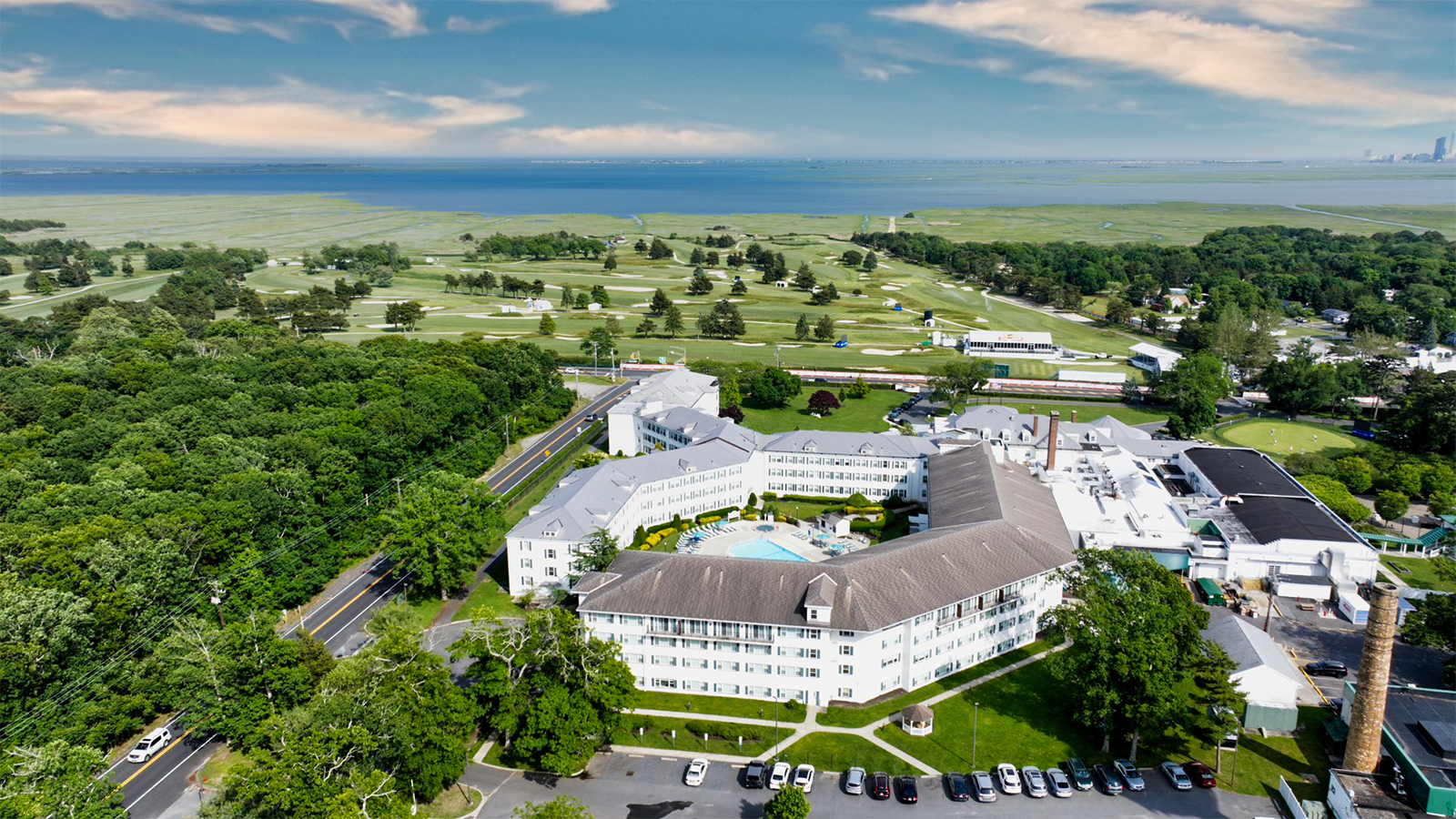
Seaview’s Bay Course does not need to flex.
That may be the most interesting thing about it.
In an era when championship golf often leans on length, scale and spectacle, this old Jersey Shore layout still asks quieter questions. Can you control your ball in the wind? Can you leave yourself the right angle? Can you accept that a short course can still make you uncomfortable if the bunkers, greens and coastal air are working against you?
That is why the Bay Course remains such a fitting LPGA Tour stop.
The ShopRite LPGA powered by Wakefern returns to Seaview Hotel & Golf Club in Galloway, New Jersey, where the best players in the women’s game will once again take on a course that is not trying to overpower them. It is trying to make them think.
And for golfers watching at home, that is where the real value lies.
Seaview is not just a tournament venue this week. It is a reminder that good golf is not always about how far the ball goes. Sometimes it is about where it finishes, what kind of shot comes next and whether a player has the discipline to choose the smart option when the aggressive one is sitting there begging to be hit.
A Classic Course With Modern Relevance
The Bay Course opened in 1914 and was designed by Hugh Wilson and Donald Ross. Along with The Pines Course, which opened in 1929 and was designed by William Flynn and Howard Toomey, Seaview even hosted the 1942 PGA Championship, where Sam Snead won his first Major. That alone gives it a different feel than many modern tournament venues.
The Bay Course is not a course built around forced carries, dramatic elevation changes or massive fairway corridors. It is a compact, coastal, strategic layout that leans on imagination, accuracy and short-game touch.
That design still holds up because the questions are timeless.
Can you flight the ball properly into the wind? Can you choose the right side of the fairway? Can you hit a wedge that lands in the correct section of a small green? Can you recover when a missed approach finds one of those deep bunkers that makes par feel like a very good score?
That is Seaview.
It may not be long by today’s standards, but it does not have to be. The Bay Course is proof that a golf course can challenge elite players without simply stretching the scorecard.
Why It Fits the LPGA So Well
The LPGA game is one of the best watches in golf. The tempo is outstanding. The ball control is elite. The decision-making is clear. And on a course like Seaview, those traits are easy to see.
Players will have chances to make birdies, but the course has a way of punishing casual mistakes. A drive that finds the wrong angle can make the next shot more complicated. A wedge that comes in with too much spin or the wrong trajectory can leave a tricky putt. A missed green on the short side can turn a reasonable scoring chance into a scramble.
That is why Seaview works so well for the LPGA.
It does not hide the skill. It highlights it.
The best players will still attack when the opportunity is there, but they will also know when the smart play is 20 feet under the hole, away from trouble. That is a lesson a lot of golfers could use.
The Wind Changes Everything
One of the biggest defenses at Seaview is not built into the ground.
It is in the air.
The Bay Course sits near the Jersey Shore, and wind can change the way players see almost every shot. A hole that looks harmless in calm conditions can become much more demanding when the breeze starts moving across the golf ball.
That is where control becomes more important than speed.
Watch how players flight their wedges. Watch how they take more club and swing softer. Watch how often they play to the wider portion of a green instead of chasing a tucked flag. Those are not conservative decisions. They are professional decisions.
For the average golfer, this is one of the best takeaways of the week: playing in wind does not mean swinging harder. Most of the time, it means controlling your finish, choosing better targets and accepting that a 25-foot birdie putt can be the correct result.
The Bunkers Tell the Story
Seaview’s bunkers are a major part of the course’s character.
They are not just there for decoration. They influence how players choose targets, how they attack greens and how aggressive they can be with approach shots.
That is especially important on a shorter course. When players have wedges and short irons in their hands, the temptation is to fire at pins all day. But if the penalty for missing is a deep bunker, an awkward stance or a short-sided recovery, the smarter play might be much different than the obvious one.
That is where tournament golf becomes course management.
The best players will not just ask, “Can I hit this shot?”
They will ask, “What happens if I miss it?”
That is the question more golfers should ask before they swing.
What Golfers Should Watch This Week
If you are watching the LPGA at Seaview, do not only follow the leaderboard. Watch the choices.
Watch how players pick targets off the tee.
Watch how they manage wedge distance in the wind.
Watch how they play away from certain bunkers, even when the flag looks tempting.
Watch how patient they stay when a good shot does not finish close.
That patience matters. Seaview can look gettable, and in stretches, it is. But “gettable” can be dangerous. It can convince players to chase. It can make a smart golfer impatient. It can turn a birdie hole into a bogey hole with one poor decision.
The winner this week will almost certainly make plenty of birdies. But she will also avoid the kind of mistakes that come from treating a classic course like it has no teeth.
A Course Worth Learning From
That is the lasting appeal of Seaview’s Bay Course.
It does not try to overwhelm the best players in the world. It tries to expose the little things that separate them.
The angle into a green. The speed of a bunker shot. The discipline to play away from trouble. The ability to flight a wedge in coastal wind. The patience to let birdies come instead of forcing them.
Those are the things that make good golf travel.
They work on the LPGA Tour. They work at Seaview. And they work at the course you play every week.
That is why this tournament remains such a good watch. Not because the Bay Course is bigger, longer or louder than everything else.
Because it is still smart.
PGA of America Golf Professional Brendon Elliott is an award-winning coach and golf writer. Read his recent “The Starter” on R.org and his stories on Athlon Sports. To stay updated on his latest work, sign up for his newsletter and visit OneMoreRollGolf.com.