Golf Travel
  Leaderboards
  Become a Member
  Shop
Shop  Trade In
 quick coaching
3 Golf Lessons From Scottie Scheffler’s Season to Lower Your Scores
By Luke Olson, PGA
Published on
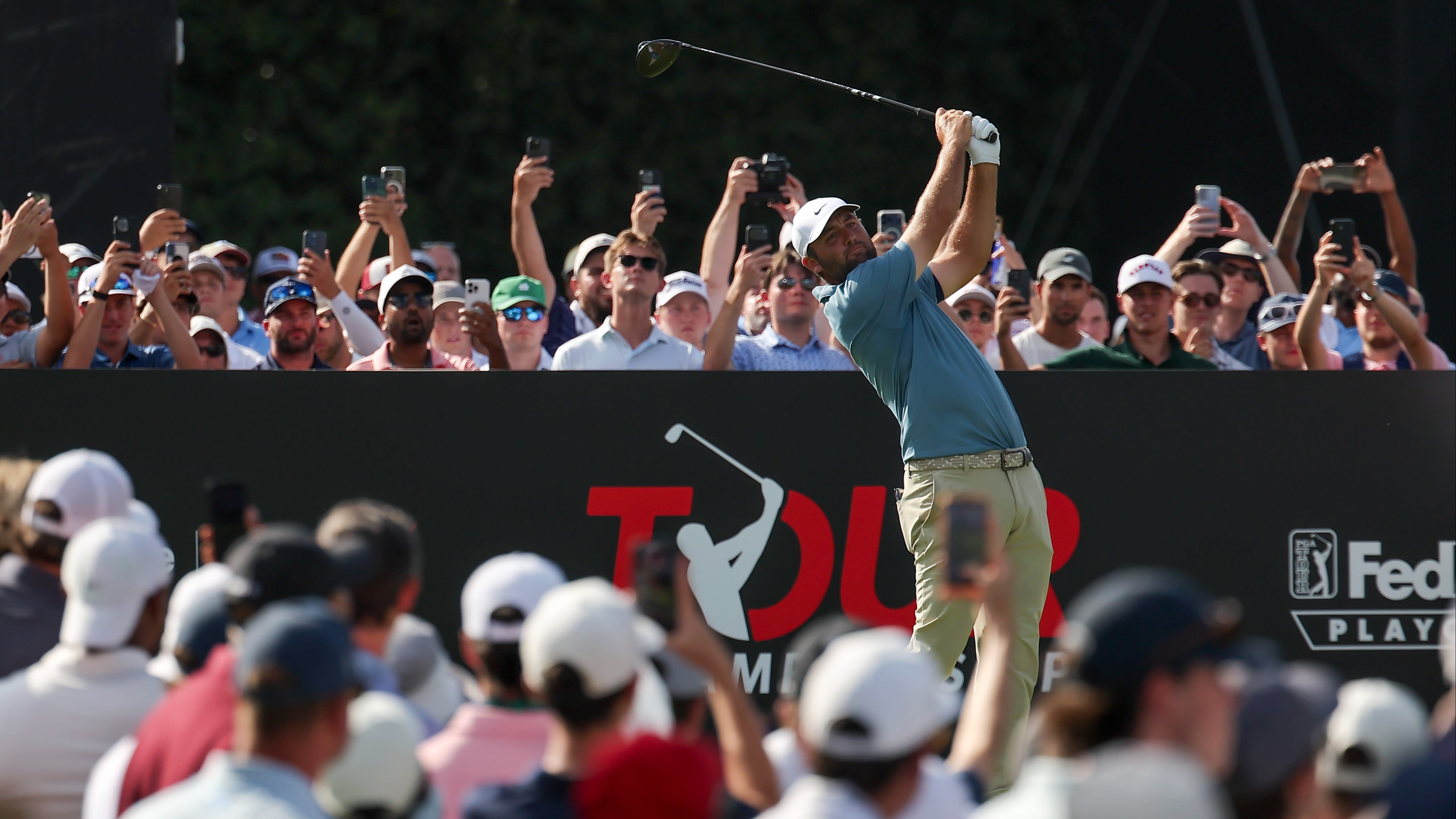
What are the top golf lessons to learn from Scottie Scheffler?
Everyday golfers can lower their scores by adopting Scottie Scheffler’s course management, pre-shot consistency, and mental resilience. Rather than relying solely on raw swing speed, Scheffler's dominance relies on three core principles:
- Master "Separation Holes": Target 3 to 4 easy scoring holes on your local course and play them with aggressive target commitment.
- Standardize Your Pre-Shot Routine: Use a consistent physical trigger and alignment sequence before every shot to reduce pressure.
- Neutralize Bad Shots Immediately: Apply a "5-second rule" after mis-hits to accept the outcome and avoid compounding errors with overly aggressive recovery shots.
Three wins, a FedEx Cup title, and surpassed Tiger Woods for career earnings. It was yet another incredible and dominant season for Scottie Scheffler.
While he didn’t win a major for the first time since 2023, he proved once again at the Tour Championship that he remains the game’s best.
And it wasn’t surprising. After the conclusion of the 2026 PGA Tour season, Scheffler led the Tour in over 20 statistical categories, including strokes gained (+2.249), scoring average (68.619), and birdie average (4.82 per round).
Here’s three areas of his game that were truly scintillating — and what everyday golfers can learn from them.
SCRAMBLE KING
While he’s a renowned ball striker, his ability to get up and down all season was equally imperative to his success.
Scheffler led the Tour in scrambling at a 67.17% clip. That stat alone shows that when things go awry with ball striking, the ability to get up and down can save meaningful strokes.
Scheffler’s strength is his ability to assess the situation and use the appropriate shot for what it calls for. He has an arsenal of different clubs and trajectories, allowing him to alter the flight, landing point and amount of release depending on the situation.
Not only is Scheffler a great scrambler, but exceptionally great at knowing what the situation calls for.
Coaching tips
- Develop 2-3 clubs you can rely on around the greens.
- Pick a landing spot and visualize the release.
- Focus on ball first contact for consistent trajectory and spin.
Drill to try
Next time you’re practicing, throw 10-15 balls around the green with different lies and locations and see how many of those shots you can successfully get up and down. In short game, no shot is ever the same.
GET ON THE GREEN
The No. 1 player in the world is celebrated as the greatest ball striker for good reason – because no one gets on the green as often as Scheffler.
He was second on the Tour in Strokes Gained: Approach the Green (0.673) and first in greens in regulation at a 72.86% clip. That’s ample of scoring opportunities for Scheffler, so it’s not surprising that he was the No. 1 money leader for 2026.
Scheffler is exceptional at controlling his start lines and distance control with his go-to stock fade (left to right). He commits to a target and gives himself the best opportunity to find the short grass. If not, he knows he’s going to trust his scrambling skills to save par.
Coaching tips
- Pick a target before selecting a club.
- Aim for the largest portion of the green.
- Built a trusted stock shot – especially under pressure.
Drill to try
Pick a target on the range and hit three balls with the same club.
For the first ball, aim directly at the target. For the second, pick a target just left of it. For the third, pick a target just right of it. Repeat the process with different clubs and distances.The goal is to learn how your normal shot moves and how much you can comfortably control your start line. Once you understand that, you can choose targets on the course that play to your natural shot shape instead of fighting it.
AVOIDING THE BIG NUMBER
One key figure in Scheffler’s successful season was avoiding bogeys or worse.
He ranked No. 1 on Tour in bogey avoidance at a 10.3% rate. This doesn’t necessarily mean he always avoids mistakes, but he doesn’t let one mishap turn into a streak of bogeys or worse. Instead, he has a knack for quickly bouncing back during his round.
For everyday golfers, avoiding bogeys isn’t always guaranteed. But one bad shot doesn’t have to lead into another.
Coaching tips
- Play for your miss. Know where you don’t want to miss so you have a manageable up and down opportunity.
- Take your medicine when needed. When you’re in trouble, don’t compound the situation by forcing a hero shot.
- Reset after mistakes. Don’t let one bad shot or hole carry over into the rest of your round.
Drill to try
Next time you play, keep track of your bad holes of bogey or worse, and identify what got away from you. Did you have a shot cause a big number, or was something forced when you could have “taken your medicine?”
We want to turn double bogeys into bogeys, and bogeys into pars.