Golf Travel
  Leaderboards
  Become a Member
  Shop
Shop  Trade In
 quick coaching
Scottie Scheffler Swing Breakdown: 5 Keys to Copy for Better Golf
By Luke Olson, PGA
Published on
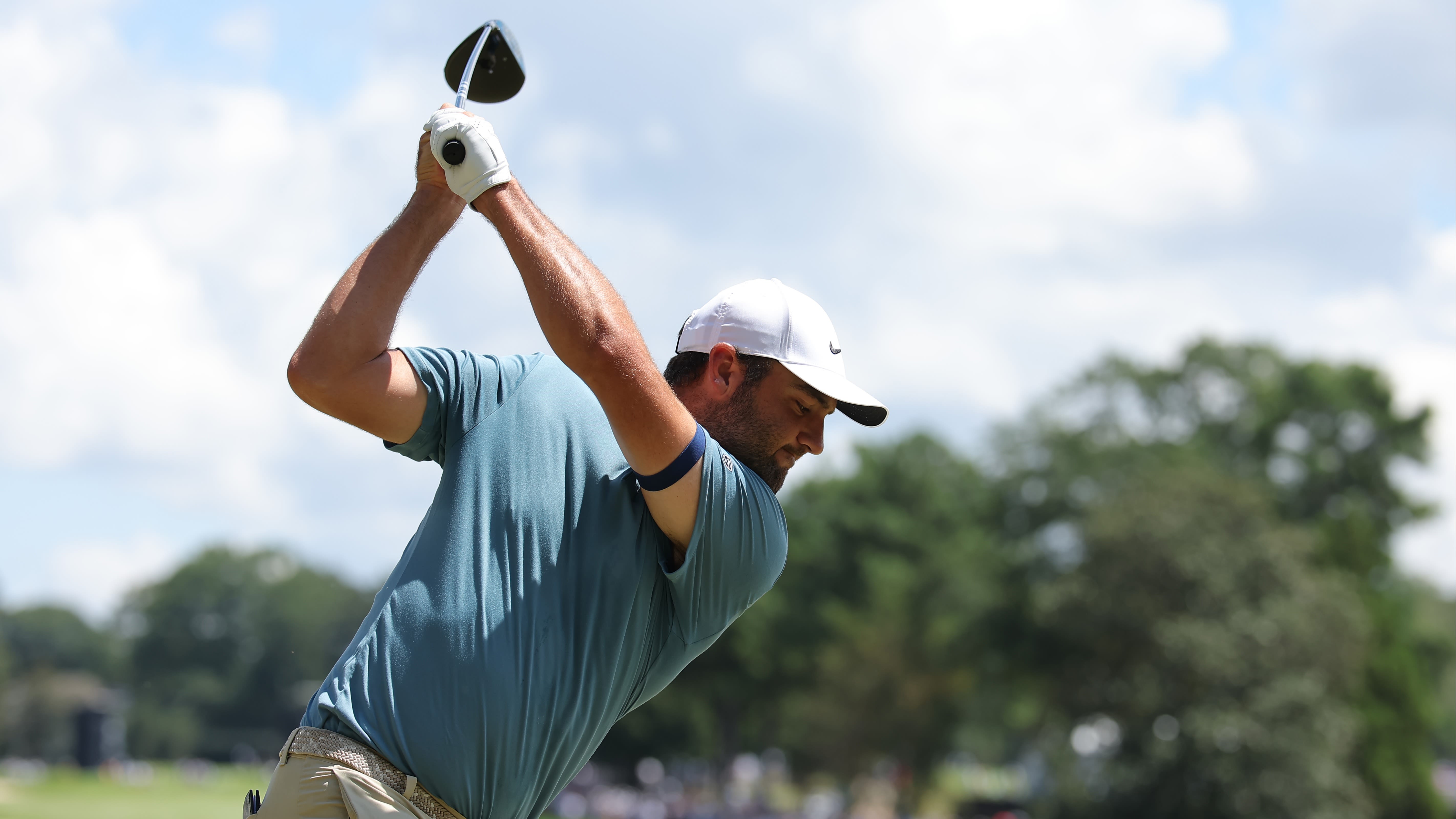
Scottie Scheffer’s swing will always be recognized as one of the most unique on tour.
The high hands; the steeper pitch of the shaft; the unorthodox foot action; and more. But there are very few who consistently produce the results like Scheffler.
While his swing isn’t one normally taught, Scheffler possesses many great elements that are teachable for the everyday golfer. And for the 2026 Tour Champion, he’s one of the best ball strikers of his generation because he consistently repeats these movements.
Here’s a swing breakdown of the 22-time PGA Tour winner and moves we can try to incorporate in our swing:
SETUP
Scheffler is known to be meticulous when it comes to his grip and posture — ingrained from an early age by his PGA Coach Randy Smith.
Scheffler is athletic and relaxed at set up. He has enough bend from the waist to allow his arms to hang freely and provide plenty of space throughout the swing. His weight is centered over the balls of his feet with his knees slightly flexed.
Scheffler constantly checks his grip and face alignment on the range by holding the club up to eye level. He pays attention to the minute details in his grip and setup — so should you.
What we can try: Before every shot, take a few seconds to check the details of your setup. Verify that your grip feels secure and consistent, weight is balanced, and your arms have enough room to hang naturally.
TAKEAWAY
Scheffler starts the swing with his club, body and arms in unison. As the club reaches parallel to the ground, the club head stays outside his hands — a great checkpoint for everyday golfers to avoid whipping the club inside.
What we can try: Place an alignment stick on the ground along your toe line, then another alignment stick into the ground behind you at an angle that matches your desired hand path. Feel your chest, arms and club move in unison while your hands work slightly up and away from the angled stick. This helps prevent the hands from immediately working too far inside and allows the clubhead to stay outside your hands.
When the shaft reaches parallel to the ground, check that the clubhead is outside your hands and the clubface is pointing to the ground (square, not open).
AT THE TOP
At the top of his backswing, Scheffler’s hands are noticeably high with minimal hand depth. However, his clubface and neutral wrist position matches his left arm plane — a checkpoint for a square clubface. Scheffler’s high hands and full turn (reminiscent of Jack Nicklaus) also increases his arc for more speed into the ball.
What we can try: Rather than trying to copy Scheffler’s high hands, feel like you complete your turn while maintaining width. A checkpoint is to pause at the top and make sure your arms haven’t collapsed and your hands haven’t run off behind your head. From there, you’ll have a better structure to start the downswing.
TRANSITION
With minimal depth, Scheffler does an excellent job in transition of moving the club downward rather than outward. He laterally slides his hips and delays his chest rotation for a split second to allow his arms and club to shallow into the ball. His lower body then continues to rotate before the upper body follows, creating the necessary sequence to generate speed and consistency.
What we can try: A powerful downswing isn’t created with improper sequencing. Allow your lower body to begin the transition while your upper body stays patient, creating space for your arms and club to follow.
IMPACT
Scheffler’s unique move through impact allows him to deliver the club with a stable, powerful strike. His lower body continues to rotate as his chest opens, while his hands and arms move through the ball without excessive manipulation of the clubface. This allows him to consistently control the clubface and produce his powerful stock fade.
What we can try: Great ball strikers don't rely on last second timing. Instead, get your clubface in a neutral position to allow your body rotation to deliver the club through impact without manipulation.
What NOT to try: Scheduler often slides and shuffles his trail foot after impact as a result of his weight transfer and body rotation. This is a natural feel to him that has been unnatural when he’s attempted to stop it. It’s a byproduct to Scheffler, NOT the everyday golfer.