Golf Travel
  Leaderboards
  Become a Member
  Shop
Shop  Trade In
 quick coaching
Master the Flighted Wedge: Lee Trevino’s Timeless Short-Game Secrets
By Brendon Elliott, PGA
Published on
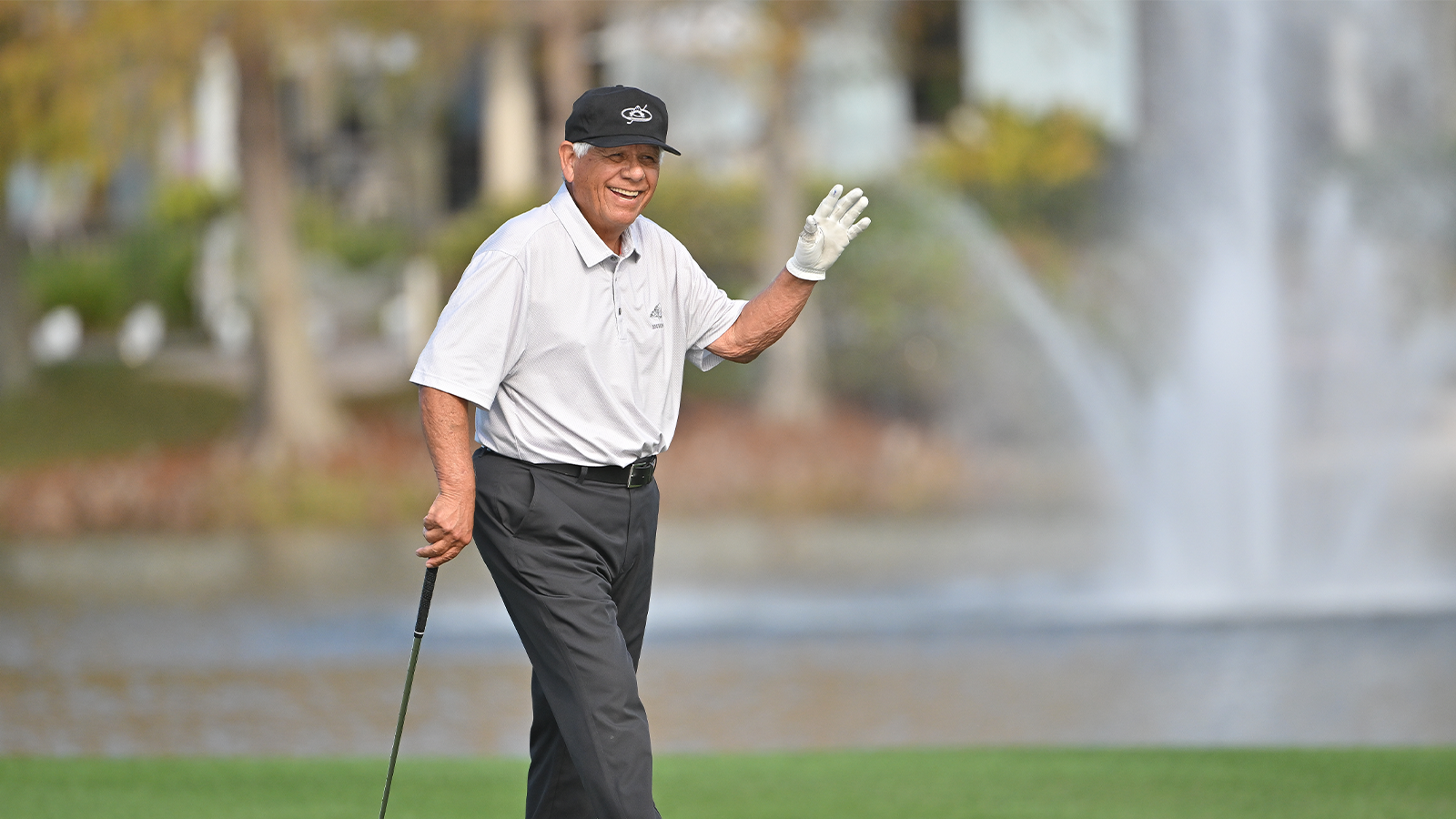
86-year-old Lee Trevino made a spectacular eagle two with a wedge on the par-4 13th hole during the final round of the PNC Championship this past weekend. Playing with his son Daniel, the six-time major winner showed why he’s still considered one of golf’s best ever with a wedge in his hand.
That eagle didn’t happen by chance. It came from decades of practice with one of golf’s most useful shots: the flighted wedge. While Trevino’s skill is special, the basics of his wedge technique are things any golfer can learn.
The Art of the Flighted Wedge
Trevino’s career was built on an unorthodox swing that produced a controlled fade and rock-solid contact. He grew up hitting balls on hardpan Texas ground with barely any grass, usually fighting the wind. That environment shaped what many consider one of the most compact, reliable swings in golf history. He had to learn how to flight the ball low and keep it under control instead of letting it balloon into the wind.
A flighted wedge helps you control the height of your shot. Regular wedge shots go high and land softly, but a flighted wedge travels lower and is more controlled, taking any potential wind issues out of the mix. When accuracy is more important than distance, or when you want the ball to roll toward the hole, this is your play with wedge shots.
Key Fundamentals for Flighting Your Wedges
Ball Position and Setup: Place the ball a little behind the center of your stance, about one or two inches back. This helps you hit down on the ball while lowering the club's effective loft. Make sure your hands are ahead of the ball at address; this will help you create forward shaft lean.
Grip Down for Control: Hold the club an inch or two lower on the grip. This gives you more control and less distance, which is what you want when accuracy is more important than power.
Abbreviated Follow-Through: To keep the ball low, use a shorter follow-through, like a punch shot with a wedge. Finish with your hands lower than in a full swing. This helps stop the clubface from turning too much and sending the ball high.
Tempo and Rhythm: Trevino always valued a smooth swing over raw power. For a flighted wedge, use a steady, controlled motion. Focus on making solid contact instead of swinging hard. The shot should feel crisp and natural, not forced.
A Lifetime Love Affair with Golf
Trevino’s recent performance stands out for more than just skill. His passion for golf remains strong after over 60 years in the game. In his post-round interview at the PNC Championship, he said: “I eat it, I sleep it, I walk it, I talk it. And I would live on a driving range today. If you put a bed and a tent on a driving range, I would sleep there.”
That’s not the “Merry Mex” exaggerating. It’s real love for a game that changed his life. Trevino grew up on a cotton farm, left school at 14, and served in the Marine Corps before discovering golf. It became more than a job — it was his calling. He won 29 PGA Tour events, including two U.S. Opens, two Open Championships, and two PGA Championships. But those numbers are only part of his story. His personality, kindness to fans and players, and dedication to the game complete the picture.
The Gift of Longevity and Legacy
Playing at 86, alongside his son Daniel, is about more than just his longevity in the sport. It’s about family, tradition, and sharing a love for the game that has given him everything.
Trevino can still compete and still hole out the occasional wedge for eagle. At his age, this proves golf is truly a lifetime sport. Lee’s continued involvement inspires players of all ages and reminds them that, with proper technique, smart course management, and mental toughness, they can enjoy and excel at golf well into their later years.
When you need to hit a wedge shot in the wind or control it better into a tricky pin position, think of Trevino’s basics: ball back, hands forward, and a short finish. But also remember that golf is about more than technique. It’s about passion, family, and a lifelong love for the game.
PGA of America Golf Professional Brendon Elliott is an award-winning coach and golf writer. Read his recent “The Starter” on R.org and his stories on Athlon Sports. To stay updated on his latest work, sign up for his newsletter and visit OneMoreRollGolf.com.