Golf Travel
  Leaderboards
  Become a Member
  Shop
Shop  Trade In
 Beginner
Masters Warm-Ups Reveal Smart Pre-Round Tips for Every Golfer
By Brendon Elliott, PGA
Published on
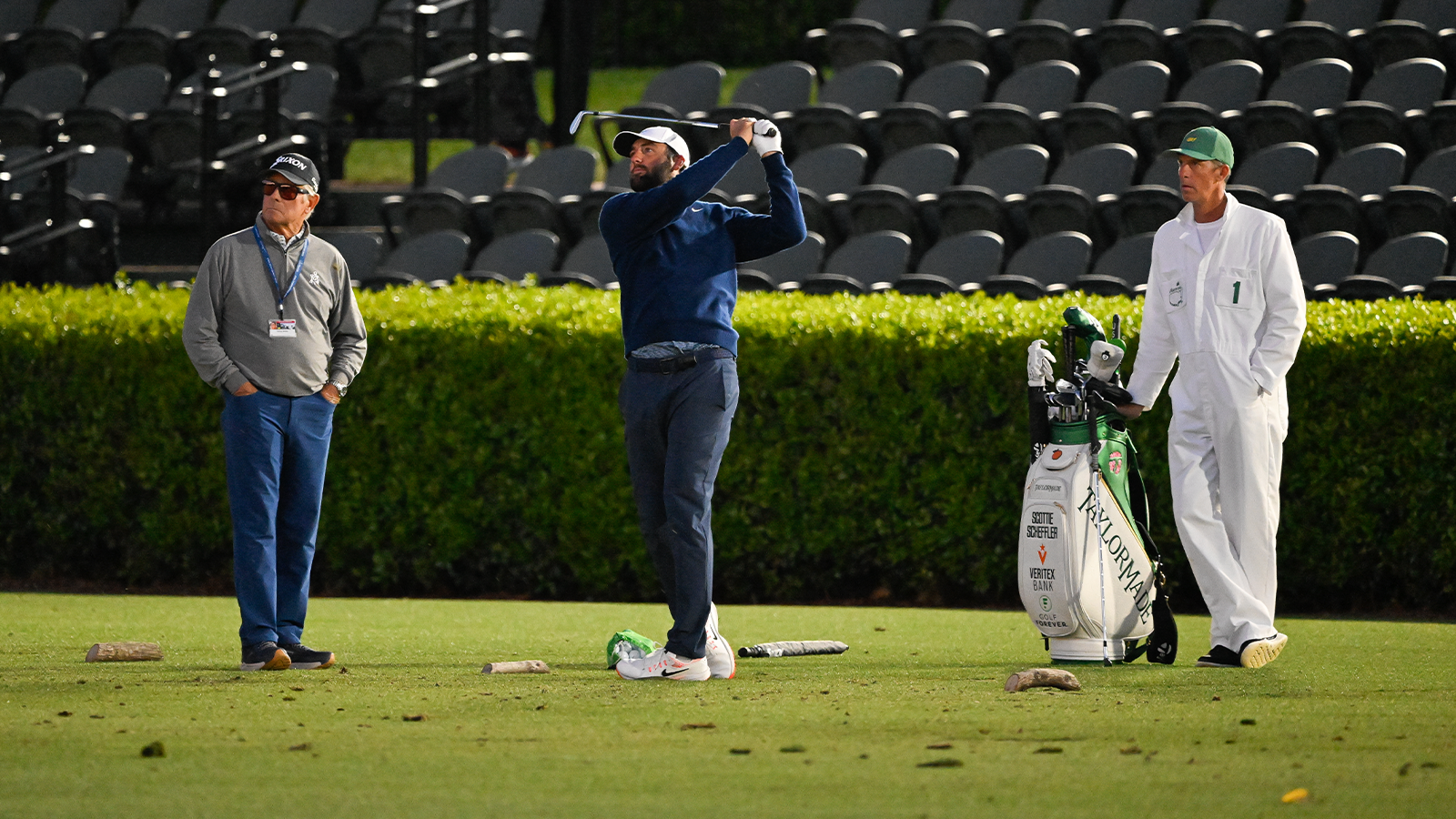
Every spring, the drive north from Orlando to Augusta feels a little like a deep breath.
I first made that trip in 2010. Since then, I have missed only twice, and those absences were mostly tied to the COVID years. Nearly every other April, I have pointed the car toward Augusta National for what has become my personal reset button. It reminds me how grateful I am for this game, for a career in golf that is pushing toward three decades, for 17 years and counting as a PGA Professional, and for a passion that started when I first picked up a club as a 5-year-old back in 1980.
That is what the Masters does for me. It pulls me back to the center.
The Best Seat on the Property
For a lot of people, the magic of the Masters starts at Amen Corner. I get it. That stretch deserves every bit of its reputation.
But my favorite place on the grounds has long been the practice facility.
Augusta National has one of the best practice setups in the game, and if you love golf for the details, not just the drama, it is a treasure chest. I can spend a huge chunk of my day there and never feel like I am missing a thing. In many ways, I am seeing the real work of championship golf. I am watching preparation, discipline, rhythm and intention.
That is also where regular golfers can learn a lot.
Too often, amateurs think warm-up means banging a bucket, ripping driver as fast as possible and heading to the first tee hoping the swing shows up. That is not what the best players in the world do. Their time on the range is purposeful. It has structure. It has pace. It has feedback built into it.
That is the first lesson.
Warm Up With Purpose, Not Panic
When you watch elite players practice before a round, one thing stands out right away. They are not trying to find a miracle. They are trying to find readiness.
That is a huge difference.
The best players usually build into the session. They start smaller. Wedges. Half swings. Tempo. Contact. Then they move through the bag with a plan. They are not chasing perfect. They are checking in with ball flight, timing and feels that travel from the range to the course.
That is exactly how everyday golfers should approach a warm-up.
Start with short shots. Get your body moving. Let your hands wake up. Listen for centered contact. Then gradually work toward longer clubs. End with the club you plan to hit on the first tee or one that gives you confidence. A good warm-up is not about emptying the bag. It is about preparing your mind and body for the first three holes.
At Augusta, that becomes crystal clear.
Watch the Routine, Not Just the Result
Most golfers watch tour players and focus only on the strike. I understand why. It is fun to watch a world-class golf swing.
But if you really want to learn, watch everything around the shot.
Watch how often they step back. Watch how they rehearse. Watch how they reset after a ball that is not quite right. Watch how little wasted motion there is. Watch how their body language stays steady, whether the last shot was beautiful or just OK.
That matters.
A great warm-up routine is emotional management in plain sight. The best players are getting loose, yes, but they are also getting calm. They are rehearsing commitment. They are settling into a rhythm they can trust when the score starts to count.
For amateurs, that is a massive takeaway. Your pre-round routine should lower noise, not add to it. Fewer swing thoughts. More awareness. More breathing. More commitment.
The Short Game Tells the Truth
If I am really studying players, I spend as much time watching the short game and putting work as I do the full swings.
Why? Because that is where you see honesty.
Players and coaches can talk all day about ball speed, sequencing and mechanics. All of that has value. But the short game strips things down. Touch, trajectory control and pace are hard to fake. Putting especially reveals who is prepared and who is still searching.
At the Masters, with those greens, that preparation matters even more.
For the average golfer, the lesson is simple. Do not let your warm-up become a full-swing only session. Hit putts of different lengths. Roll some mid-range putts to get your eyes working. Chip a few basic shots and pay attention to landing spots. If you have only 20 minutes, carve out at least a few for the scoring clubs. That time usually pays off faster than five extra drivers.
You Can Learn From Home, Too
Even if you are not on site, you can still turn Masters week into a learning week. Official 2026 Masters coverage includes “On the Range” on Masters.com and the Masters App, and the tournament’s Range Tracker is back as well, giving fans another way to study practice patterns and ball flights.
That is a gift for golfers who are paying attention.
So while I will make my annual pilgrimage north again and soak in that reset, as I always do, I also know this: the best lesson at Augusta is not always found on the leaderboard. Sometimes it is found on the practice ground, in the quiet work before the walk to the first tee.
And for any golfer willing to watch closely, that lesson is available every April.
PGA of America Golf Professional Brendon Elliott is an award-winning coach and golf writer. Read his recent “The Starter” on R.org and his stories on Athlon Sports. To stay updated on his latest work, sign up for his newsletter and visit OneMoreRollGolf.com.