Golf Travel
  Leaderboards
  Become a Member
  Shop
Shop  Trade In
 Course Spotlight
Playing in La Quinta: Inside the PGA Tour’s Three-Course Palm Springs Challenge
By Brendon Elliott, PGA
Published on
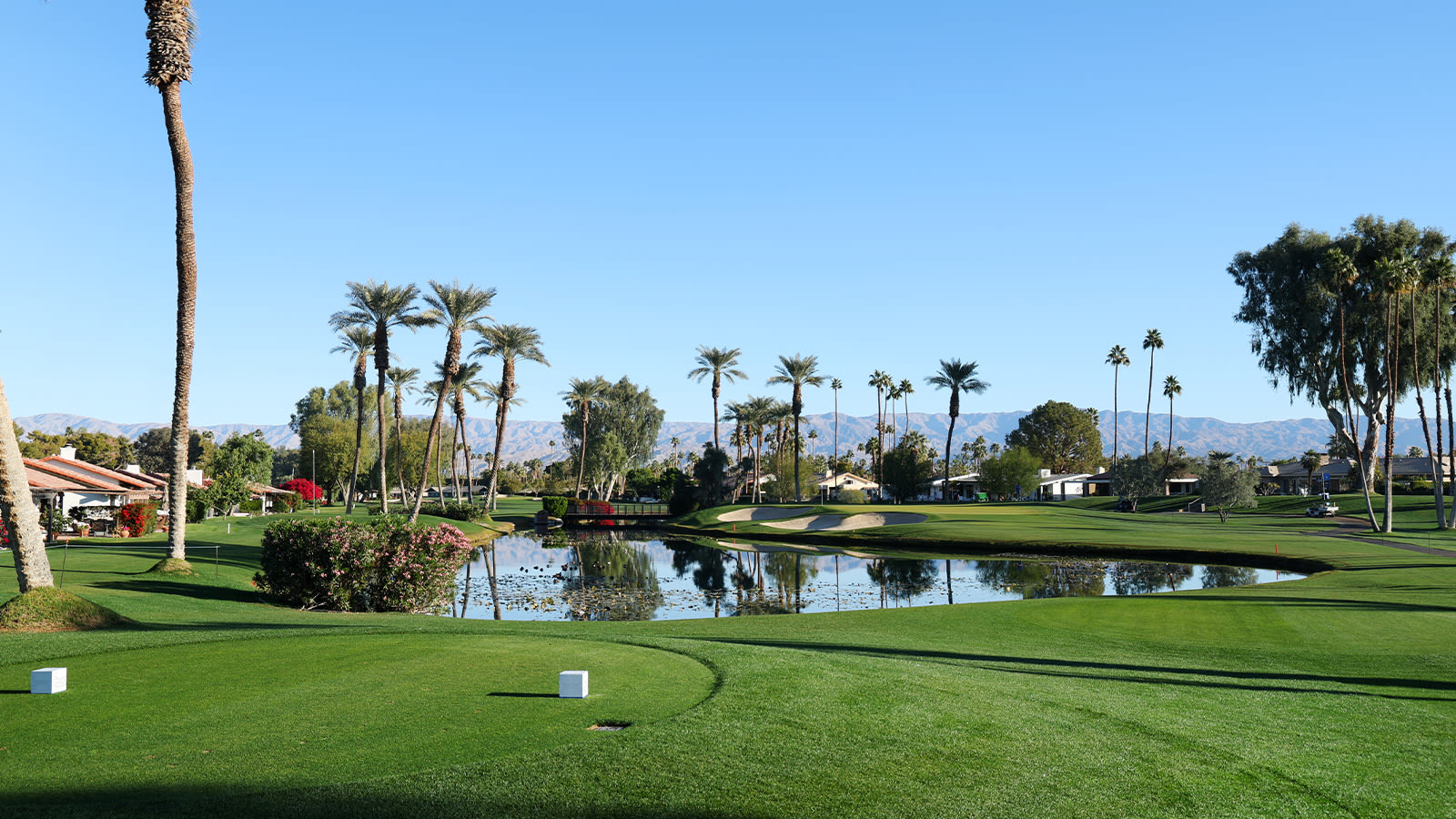
Every January, when the PGA Tour visits the Coachella Valley, three distinct courses come together to create one of golf’s most unique challenges. The American Express isn’t your typical tournament. Instead of playing the same 18 holes four times, players rotate through three courses before the cut, then battle on one layout for the championship. This format tests versatility, rewards adaptability plus keeps things interesting for everyone involved.
The three courses in this desert showcase are the Pete Dye Stadium Course at PGA West, the Nicklaus Tournament Course at PGA West and La Quinta Country Club. Each brings its own personality, and together they create a tournament experience unlike any other on tour.
The Stadium Course
If you’re going to talk about PGA West, you have to start with the Stadium Course. Pete Dye designed it in 1986 as a sequel to TPC Sawgrass, and he wasn’t messing around. Inspired by links-style courses in Scotland, Dye created something equal parts beautiful and brutal.
The course now stretches 7,210 yards and plays to a par 72, but those numbers don’t tell the whole story. What makes the Stadium Course legendary is its difficulty. Dye packed it with pot bunkers, water hazards and greens that can make even tour pros look like weekend hackers.
The most famous hole is the 17th, nicknamed “Alcatraz.” It’s an island green that calls for precision and nerves of steel. Miss it and you’re reaching for another ball. The 18th is not much friendlier, with water lining the entire left side. These finishing holes have produced some of the tournament’s most memorable moments and heartbreaking collapses.
Here’s the thing about the Stadium Course: when it debuted as part of the Bob Hope Classic rotation in 1987, the pros hated it. They thought it was too hard, too tricked up, too much. They signed a petition to get it removed from the tournament, and it worked. The course was banned from tour play for nearly three decades.
But times change. The Stadium Course returned to the rotation in 2016 and now serves as the primary venue for the final round. Players have come to respect what Dye created, even if they don’t love it. It’s a course that demands your best golf, and there’s something pure about that.
The Nicklaus Tournament Course
Jack Nicklaus designed the Tournament Course with the 1991 Ryder Cup in mind. That event never happened at PGA West because the European Broadcasting Union objected to the time difference, but the course Nicklaus created remains a demonstration of his design philosophy.
At 7,147 yards, what sets this layout apart is Nicklaus’s signature style: strategic bunkering, multiple risk-reward opportunities and greens that reward good iron play while punishing anything less.
The course features two island greens, a rarity in golf course design. That dramatic element makes for great television and even better stories. But it’s not only about the wow factor. The Nicklaus Tournament Course is forgiving off the tee and demanding around the greens, which creates a distinctive dynamic. You can get away with a less-than-perfect drive, but you need to be sharp with your short game.
The course has been part of the rotation since 2016, and it provides a contrast to the Stadium Course’s in-your-face difficulty. It’s challenging without being punishing, strategic without being gimmicky.
La Quinta Country Club
While PGA West gets most of the attention, La Quinta Country Club has been part of this tournament’s DNA since 1964. That’s 60 years of history, and you feel it when you play there.
At 7,060 yards and par 72, La Quinta is the shortest of the three courses, but don’t let that fool you. This classic desert layout rewards accuracy and course management. It doesn’t have the stadium seating or the island greens, but it has something else: authenticity.
La Quinta has hosted more rounds of this tournament than any other course. It’s seen Arnold Palmer, Jack Nicklaus and generations of golf’s greatest players. When you walk those fairways, you walk where legends walked.
The course provides a different test than the two PGA West layouts. It’s more traditional, more straightforward. Some might call it easier, but that’s not quite right. It’s just different. And in a tournament that uses three courses, that variety is exactly the point.
The Desert Experience
The Bob Hope Desert Classic (and several other names through the years) has been a fixture in the Coachella Valley since 1960. Arnold Palmer won that first edition, and the tournament has made memories ever since.
The three-course rotation creates a unique challenge. Players can’t just dial in one course and repeat. They need to modify their strategy daily, adapt to different conditions and stay mentally sharp. It’s a test of versatility that you don’t get at most tour stops.
When Sunday rolls around and the field heads to the Stadium Course for the final round, that’s when things get real. Pete Dye’s masterpiece has the final say, and it rarely disappoints.
PGA of America Golf Professional Brendon Elliott is an award-winning coach and golf writer. Read his recent “Playing Through” on R.org and his stories on Athlon Sports. To stay updated on his latest work, sign up for his newsletter and visit OneMoreRollGolf.com.