Golf Travel
  Leaderboards
  Become a Member
  Shop
Shop  Trade In
 Intermediate
Simple Golf Tips Inspired by Rory McIlroy’s Latest Win
By Brendon Elliott, PGA
Published on
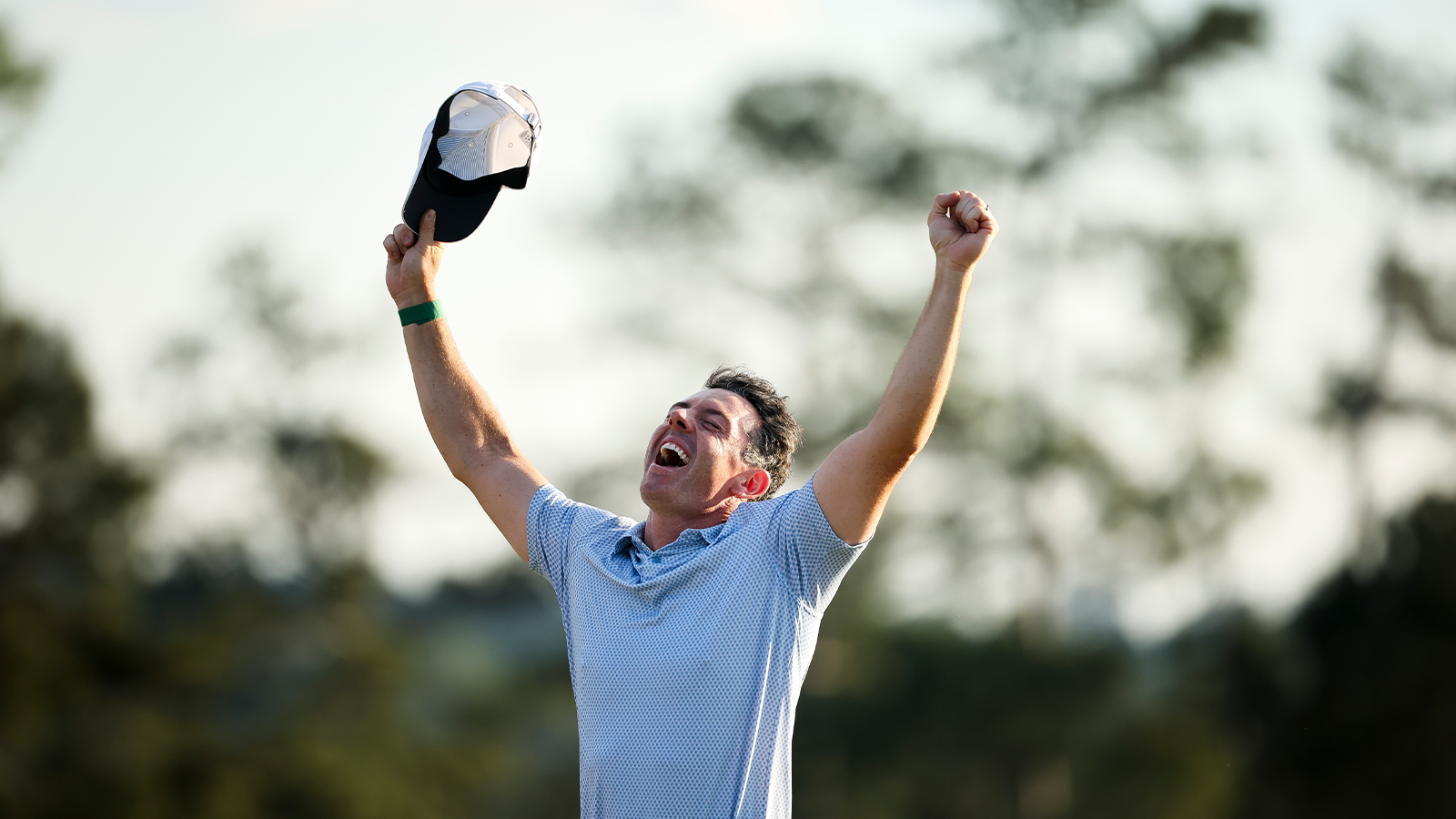
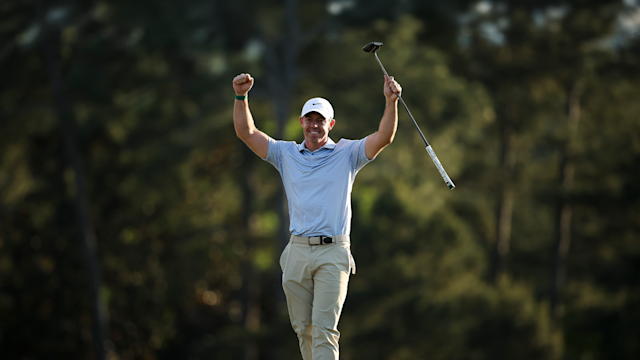
Rory McIlroy’s latest win was inspiring for a lot of reasons. The ball-striking was brilliant. The confidence was obvious. The poise under pressure stood out. But as a PGA Coach, what I keep coming back to is this: the biggest lessons from Rory’s golf are not about talent. They are about habits.
The average golfer does not need Rory’s speed or flexibility to get better. What they can borrow is his clarity, commitment and discipline. That is where real improvement begins.
Here are five practical lessons golfers can take from Rory’s play and use in their own games right away.
Trust Your Stock Shot
One of the biggest differences between tour players and amateur golfers is that elite players know what shot they want to hit. Average golfers often stand over the ball with too many ideas.
Rory succeeds because he is not guessing. He is committed.
Here is how to apply that to your own game:
Step 1: Identify your most common ball flight.
Do you usually fade it a little? Draw it a little? Hit it mostly straight? Be honest.
Step 2: Stop fighting it for one full round.
If your normal shot is a fade, play for the fade. Aim accordingly and let it happen.
Step 3: Match your target to that shape.
Pick a starting line that gives your ball room to curve without finding trouble.
Too many golfers waste strokes trying to hit a perfect shot they do not own. I would much rather see a player hit the same reliable cut or draw all day than try three different shapes in six holes.
Your on-course action item:
For your next round, write “Play my stock shot” on your scorecard. Use that as your reminder on every full swing.
Pick Safer Targets and Make Better Swings
Rory’s best golf is aggressive in motion but smart in decision-making. That is a powerful combination for any golfer.
Many amateurs think lower scores come from firing at more flags. In reality, lower scores usually come from taking trouble out of play.
Here is the step-by-step approach I teach:
Step 1: Before every approach shot, find the biggest danger.
Is it short-sided rough? A front bunker? Water left?
Step 2: Pick a target that finishes away from that trouble.
This often means aiming for the center of the green or its widest section.
Step 3: Make a full, confident swing to that safer target.
Do not guide it. Commit to it.
I call this making an aggressive swing to a conservative target. That is one of the fastest ways for everyday golfers to make fewer doubles and more pars.
Your on-course action item:
On three approach shots in your next round, aim for the fat side of the green even if the pin is tucked. Track how often that leaves you with an easy putt or chip.
Get Better at Scoring Distance
One thing Rory always does well when he is sharp is give himself good looks from scoring range. You do not have to hit it 330 yards to do the same in your own way.
Most golfers can save shots by becoming more organized from 40 to 100 yards.
Try this practice plan:
Step 1: Pick three wedge distances.
A good starting point is 40, 60 and 80 yards.
Step 2: Hit five balls to each distance.
Use the same club if you want, or different wedges, but focus on producing repeatable carry numbers.
Step 3: Write down what swing length matches each distance.
For example, chest high might be 40 yards. Shoulder high might be 60. Full but controlled might be 80.
Step 4: Use those numbers on the course.
Instead of guessing, you now have a simple system.
As a coach, I see too many players treat wedge shots like feel-only shots. Feel matters, of course, but feel gets better when it is backed by a plan.
Your practice action item:
Spend 20 minutes this week building your three favorite wedge yardages. Those shots come up constantly.
Improve Your Speed Control on the Greens
When Rory looks comfortable on the greens, his pace control is usually a big reason why. Great putting is not only about making putts. It is about leaving yourself easy next putts.
That is where most amateurs can improve quickly.
Here is a great drill:
Step 1: Drop three balls at 20 feet, 30 feet and 40 feet.
Step 2: Putt all three to the same hole.
Step 3: Your goal is not to make them. Your goal is to stop every ball inside a three-foot circle around the hole.
Step 4: Repeat until all three are inside the circle.
This teaches distance control, which is the foundation of putting confidence. Once your speed improves, your green reading improves too because you start matching line and pace much better.
Your practice action item:
Before your next round, spend 10 minutes on long putts only. Focus on finishing close, not making everything.
Build a Better Response After Bad Shots
This may be the biggest lesson of all. Rory, like every great player, has learned how to recover. The average golfer often turns one mistake into two or three because of frustration.
You need a reset routine.
Here is one I recommend:
Step 1: After a bad shot, take one breath before doing anything else.
Step 2: Say something neutral to yourself.
Try, “Okay, next shot,” or “Get this one back in play.”
Step 3: Choose the simplest recovery option.
Do not chase a miracle unless you truly have one.
Step 4: Recommit fully to that recovery shot.
Golf rewards composure. You do not need to erase every mistake with something heroic. Most of the time, the smart play is the one that keeps the round alive.
Your on-course action item:
The next time you hit a poor shot, do not rush. Use the four-step reset before you hit again.
The Real Takeaway
Rory’s win is a great reminder that winning golf is not just about talent. It is about patterns, discipline and trusting what works.
For the rest of us, improvement usually comes the same way.
Trust your stock shot. Aim smarter. Get organized with your wedges. Control speed on the greens. Respond better after mistakes.
That is golf coaching in its simplest and most powerful form. And those are lessons any golfer can take from a champion.
PGA of America Golf Professional Brendon Elliott is an award-winning coach and golf writer. Read his recent “The Starter” on R.org and his stories on Athlon Sports. To stay updated on his latest work, sign up for his newsletter and visit OneMoreRollGolf.com.