Leaderboards
  Become a Member
  Shop
Shop  Trade In
 quick coaching
The Course Management Lessons From Haeran Ryu’s AIG Women’s Open Bounce-Back
By Brendon Elliott, PGA
Published on
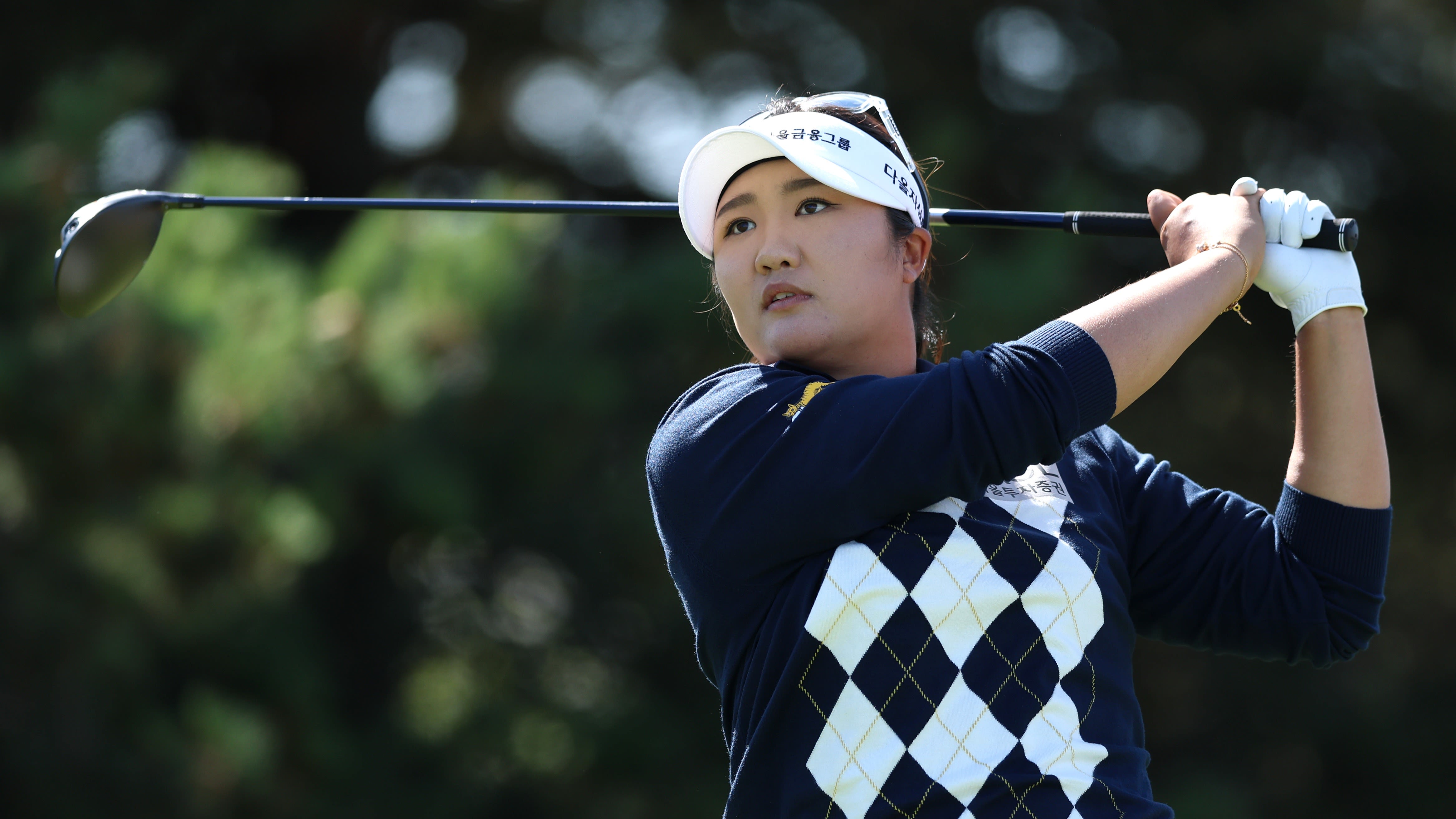
Haeran Ryu did not reach the halfway lead at the AIG Women’s Open by playing mistake-free golf.
She was 3 over par through five holes Friday after a bogey at No. 3 and a double bogey at No. 5. Then she settled down, made five birdies over the final 13 holes and signed for a 69.
The more useful story for everyday golfers is in the numbers surrounding that recovery. Through two rounds at Royal Lytham and St Annes, Ryu hit 24 of 28 fairways and 31 of 36 greens. Those are elite totals, but the lesson is not that you need to start hitting almost every green.
Good scoring often begins with putting the ball on the side of the hole where the next shot is still manageable.
Stop Aiming at the Flag by Default
Most golfers look straight at the hole location. A better player looks at the whole green first.
Before choosing a club, ask two questions: Where is the big trouble, and where can I still play a normal next shot? Those answers should shape the target more than the flag itself.
If the hole is cut on the right with a deep bunker guarding that side, the middle-left portion of the green may be the best target. A shot that drifts a little right can still finish near the flag. A shot that stays straight leaves a routine putt. The only poor result is the one that crosses into the bunker.
The same thinking applies from the tee. If the left rough leaves a clear approach but the right side brings trees or a penalty area into play, shade the target left. Do not aim down the middle just because that is what golfers have been told to do. The center is not always the safest place.
I have watched plenty of golfers aim at a dangerous flag, miss it by only a few yards and still make double bogey. The swing was not the real problem. The target gave the miss nowhere to go.
On the course, aim far enough from the trouble that your normal miss can still leave the ball in play. That may feel conservative, but it is how rounds stay together.
Build a Control Shot for Placement Holes
There are times when distance matters. There are also holes where another 10 yards creates no real advantage.
For those situations, I like a simple control pattern:
- Take one more club than your absolute maximum-distance club.
- Grip down about half an inch.
- Make a balanced swing and hold the finish until the ball lands.
The extra club removes the need to force speed. Gripping down gives many golfers a little more awareness of the clubface. The held finish tells you whether the swing stayed under control. At the finish, your chest should face the target area, most of your pressure should be on the lead foot and you should be able to remain still for two full seconds.
Do not try to manufacture a special shot shape unless you already own one. Start the ball on a sensible line and let your normal pattern work. If your stock iron curves five yards left, account for it before you step in. Do not aim at the trouble and hope the ball suddenly flies straight.
This is not a claim about Ryu’s technique. It is a coaching application inspired by how often she has kept the ball in useful positions through two rounds.
Practice the Side You Can Afford to Miss On
Most range sessions have one target and one definition of success. Real golf is not that clean.
Pick a target on the range and create two sides: a playable side and a costly side. The playable side should resemble short grass, the center of a green or an open chip. The costly side should represent a bunker, penalty area or short-sided miss.
Hit 12 shots with the same club.
Give yourself two points for finishing in the target area, one point for missing on the playable side and minus two for missing on the costly side. Your first goal is not a perfect score. It is to complete the set with no more than two costly-side misses.
Then switch the danger to the opposite side and repeat. In lessons, I use this kind of scoring because it exposes whether a golfer is actually changing the target or simply making the same swing toward the same flag.
This drill tells you more than a tight grouping around one target. It shows whether you can organize your aim around the hole in front of you. That is a skill many golfers never practice, even though they need it on nearly every approach shot.
Ryu’s Friday round offered one more lesson. A bad start does not require a heroic response. It requires the next sensible target, the next committed swing and a ball that stays in a playable place.
You do not need to hit 31 greens in two rounds to use that idea. You need to stop making the hole harder with your aim.
PGA of America Golf Professional Brendon Elliott is an award-winning coach and golf writer. Read his recent “The Starter” on R.org and his stories on Athlon Sports. To stay updated on his latest work, sign up for his newsletter and visit OneMoreRollGolf.com.