Golf Travel
  Leaderboards
  Become a Member
  Shop
Shop  Trade In
 quick coaching
What Basketball Can Teach Us About the Golf Swing
By Braedon Fox, PGA
Published on
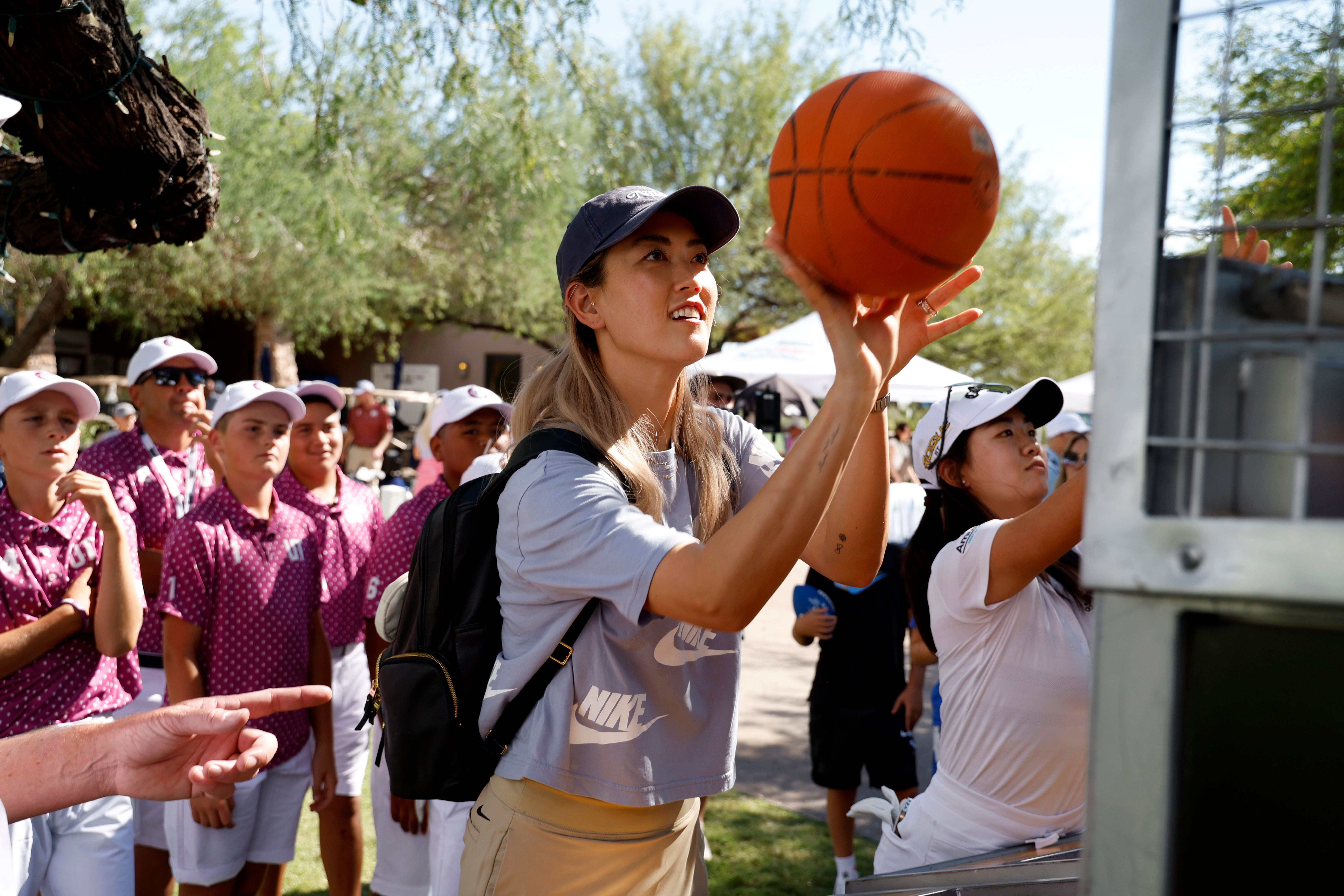
At first glance, golf and basketball may seem like completely different sports. One is played on a 7,000-yard course, while the other takes place on a 94-foot court. However, when you break down the movements and mental skills required to succeed, the similarities are striking.
Here are four basketball movements that closely relate to the golf swing and golf performance.
1. The Jump Shot = Golf Swing Sequence
Whether you're hitting a 7-iron or shooting a three-pointer, power comes from the ground—not the hands.
In the golf swing, power begins with the interaction between your feet and the ground. Golfers create force by pushing into the ground and transferring that energy through their body and into the club. The same principle applies to a basketball jump shot.
Players who rely solely on their arms and hands often struggle with both power and consistency. In both sports, the most efficient athletes use the ground to create energy before transferring it through the body and into the shot.
When the body works as one connected unit, players gain both speed and accuracy.
2. Passing a Basketball = Release and Extension
Passing a basketball shares many similarities with the feeling of extending through impact in the golf swing.
In both sports, players who use only their arms lose speed, power, and accuracy. The entire body must work together to create an efficient movement pattern.
One of the biggest speed generators in the golf swing is extension through impact. Elite golfers maintain width and extend their arms toward the target after impact, allowing them to maximize clubhead speed while maintaining control.
The same concept applies when passing a basketball. Players extend their arms toward their intended target to create both power and accuracy. In both sports, proper extension helps transfer energy efficiently and improves overall consistency.
3. Free Throws = Putting
This may be the strongest comparison of all.
A free throw and a six-foot putt are less about athleticism and more about repeating a process under pressure.
The player who consistently makes clutch putts is often the same type of athlete who wants the ball at the free-throw line with the game on the line.
One of the best examples is Stephen Curry. Curry's reputation as one of basketball's greatest shooters is built not only on talent, but on an unwavering commitment to preparation and routine. Every free throw follows the same process, regardless of the situation.
Great putters operate in much the same way.
Having a consistent pre-shot routine is critical in both sports. Repetition creates confidence, and confidence allows athletes to perform under pressure. When the moment gets bigger, muscle memory takes over.
The athletes who appear most "clutch" are often the ones with the most consistent routines.
4. The Crossover = Tempo Change
Great basketball players know how to change speeds.
Great golfers do too.
Neither sport is about moving as fast as possible from start to finish. Instead, elite performers understand when to stay patient and when to accelerate.
In golf, players remain controlled during the takeaway before creating speed during the transition and accelerating through impact. In basketball, a successful crossover relies on a similar change of pace to create separation from a defender.
Timing matters more than raw speed.
A golfer with poor tempo during the transition often loses sequencing, leading to inconsistent shots. Likewise, a basketball player who changes speeds too abruptly or lacks control during a crossover can lose possession and create costly turnovers.
In both sports, smooth tempo changes create efficiency, while rushed movements often lead to mistakes.
Why So Many Basketball Players Enjoy Golf
The similarities between basketball and golf may help explain why so many NBA players have embraced the game.
Many current and former NBA & WNBA players are known for their passion for golf, including Stephen Curry, Caitlin Clark, Michael Jordan, Austin Reaves, J. R. Smith, Diana Taurasi, Kyle Lowry, Chris Paul, Andre Iguodala, Mike Conley Jr., Kyle Korver, Jalen Brunson, Josh Hart and many more.
While the sports look different on the surface, both require coordination, timing, balance, sequencing, and mental toughness. The more you study the movements involved, the easier it becomes to see why skills developed on the basketball court can translate so naturally to the golf course.