Golf Travel
  Leaderboards
  Become a Member
  Shop
Shop  Trade In
 quick coaching
Ben Kern’s PGA Championship Lessons Every Golfer Should Use
By Brendon Elliott, PGA
Published on
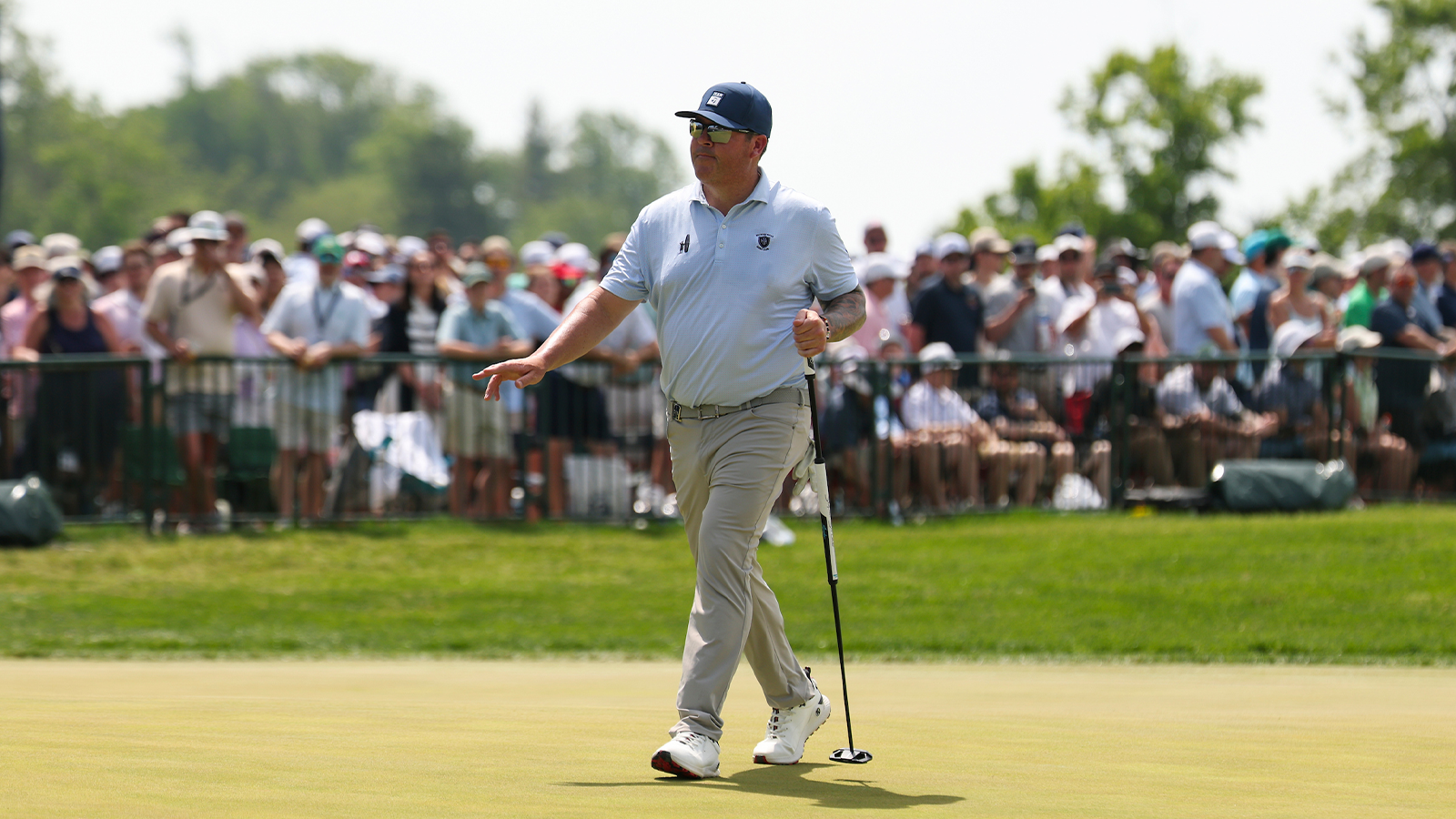
Ben Kern’s week at the PGA Championship was not just a feel-good story. It was a teaching story.
Kern, the PGA General Manager at Hickory Hills Golf Club in Grove City, Ohio, stood on one of golf’s biggest stages at Aronimink and did something every golfer can learn from. He stayed ready. He competed. He handled the moment. And when the week was over, he walked away as the Low PGA of America Golf Professional for the second time in his career.
That is inspiring on its own.
But for everyday golfers, the bigger lesson is this: your best golf does not usually show up because everything is perfect. It shows up because you know how to compete with the game you brought that day.
Kern has a job. He has members to serve, staff to support and a golf operation to help run. That is what makes his week so relatable. Most golfers are not playing and practicing all day. They are fitting golf around life, work, family and responsibilities.
So the question becomes: How do you stay sharp when time is limited?
Kern’s PGA Championship offers a great answer.
Build a Game That Travels
One of the best things any golfer can do is develop a game that holds up when conditions get tough.
That does not mean perfect mechanics. It means reliable ball control, smart decisions and a short game you can trust when you miss greens.
Kern’s second-round 67 came on a difficult stage, under major championship pressure, on a golf course that demanded patience and precision. That kind of round does not happen by accident. It comes from knowing your patterns and staying committed to them.
For amateur golfers, this starts with a simple question:
What is my most dependable shot?
Not your dream shot. Not the one you hit once every few rounds. Your dependable shot.
If your normal ball flight is a fade, stop trying to hit a draw under pressure. If your best wedge is a lower, controlled shot, stop forcing high, soft shots to every pin. If your driver is inconsistent, build a tee-shot plan that gives you more options.
Good golf is often less about adding shots and more about trusting the right ones.
Quick Tip: Create Your Go-To Shot
Before your next round, spend 10 minutes on the range identifying one shot you can use under pressure.
Try this:
- Pick a target.
- Hit five balls using your most comfortable swing.
- Notice your natural curve and typical miss.
- Hit five more balls trying to repeat that same shape.
- Take that shot to the course instead of chasing something different.
A trusted pattern beats a perfect swing you cannot repeat.
Keep Going After a Mistake
One of the biggest differences between golfers who recover and golfers who unravel is what happens after the bad shot.
Most amateurs lose shots after the mistake, not only because of it. They follow one poor swing with a rushed decision, an emotional club choice or an overly aggressive recovery attempt.
The best competitors know how to reset.
A bogey does not have to become a double. A missed fairway does not have to turn into a hero shot. A three-putt does not have to ruin the next tee shot.
Quick Tip: Use a Three-Step Reset
After a poor shot, use this process before you hit again:
- Accept it: Say to yourself, “That shot is over.”
- Assess it: Find the safest and smartest next play.
- Commit to it: Make a full swing to a conservative target.
This is not just mental-game advice. It is scoring advice. The fastest way to lower scores is to stop compounding mistakes.
Practice the Shots That Save Rounds
Kern’s final round included a chip-in birdie and a long birdie putt. Those are highlight moments, but they also point to something every golfer should remember.
The short game keeps rounds alive.
You do not need to hole every chip or make every 30-footer to benefit from better short-game practice. You just need to leave yourself less stress.
That means improving your first putt from long range, your basic chip around the green and your ability to get out of trouble without making a big number.
Quick Tip: The 20-Minute Scoring Practice Plan
Use this before your next round or during a short practice session:
Five minutes: Lag putting
Hit putts from 25, 35 and 45 feet. Try to finish every ball inside a three-foot circle.
Five minutes: Short putts
Hit 20 putts from three to five feet. Go through your full routine on every one.
Five minutes: Basic chips
Use one club and land the ball on the green as soon as possible. Focus on solid contact and predictable rollout.
Five minutes: Trouble shots
Practice from light rough, a bare lie or a downhill lie. These are the shots golfers face often but rarely practice.
Enjoy the Walk
One of the best parts of Kern’s week was how much he embraced it.
That matters.
Golfers often play worse because they try so hard to force a result that they forget to experience the round. Kern was competing in a major championship, yet still showed the value of enjoying the walk, staying present and appreciating the opportunity.
There is a lesson there for every golfer.
You can care deeply and still enjoy it. You can compete hard and still smile. You can want to play well and still be grateful for the chance to tee it up.
Tension rarely produces your best golf. Gratitude, commitment and clear thinking give you a much better chance.
Your Takeaway
Ben Kern’s week at the PGA Championship should inspire every golfer, but it should also challenge every golfer.
Are you practicing the shots you actually need? Do you know your most reliable pattern? Can you reset after mistakes? Are you playing the course in front of you instead of chasing the round you imagined?
That is where better golf begins.
Not with a perfect swing. Not with unlimited practice time. Not with a game that looks like someone else’s.
Better golf begins with preparation, trust and the willingness to keep going.
Ben Kern reminded us of that on one of golf’s biggest stages.
Every golfer can start applying that lesson the next time they tee it up.
Want help building a game that travels? Find a PGA Coach near you and create a plan that fits your swing, your schedule and your goals.
PGA of America Golf Professional Brendon Elliott is an award-winning coach and golf writer. Read his recent “The Starter” on R.org and his stories on Athlon Sports. To stay updated on his latest work, sign up for his newsletter and visit OneMoreRollGolf.com.