Golf Travel
  Leaderboards
  Become a Member
  Shop
Shop  Trade In
 quick coaching
Tom Kim Swing Breakdown: 5 Lessons Golfers Can Learn From the Scottish Open Champion
By Luke Olson, PGA
Published on

Tom Kim surely has an affinity for links golf.
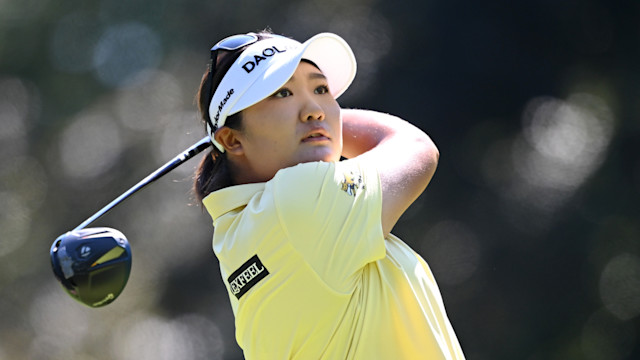
After a run of success at the Renaissance Club since his debut in 2022, Tom Kim finally broke through Sunday with a bogey-free 64 to win the Genesis Scottish Open.
Traditionally not one of the longest hitters, Kim has built his game around elite iron play. His repeatable, compact swing prioritizes accuracy, consistency and control — qualities that have made Kim especially thrive on links-style courses.
Here’s a breakdown on the four-time winner’s swing that every day golfers can emulate.
Setup
Kim begins with a textbook posture that sets the foundation for a repeatable swing. He looks athletic yet relaxed, allowing his arms to hang naturally from his shoulders without creating unnecessary tension.
His weight is centered over the balls of his feet, with his knees flexed and his body positioned that gives him plenty of room to make a proper turn.
What you can learn: Before worrying about swing mechanics, build a repeatable set up. A relaxed, athletic posture like Kim’s gives you the best chance to make a consistent swing.
Takeaway
Kim starts the swing with his club, body and arms in unison. His takeaway is controlled yet wide, driven by his torso rotation rather than his hands.
As the club reaches parallel to the ground, the clubhead stays just outside his hands. His clubface matches the angle of his spine, a checkpoint that helps him maintain face control.
What you can learn: A repeatable swing starts with a consistent takeaway. Instead of immediately pulling the club back with your hands, allow your chest and arms to work together to create width and maintain control. Keeping the club in front of your chest is a great thought.
Top of Swing
At the top of Kim’s swing, he’s noticeably more compact than what many everyday golfers create. Despite that shorter arm swing, he still completes a full shoulder turn while maintaining plenty of width.
Kim’s minimal wrist hinge keeps his arms from traveling too far behind him, helping him stay connected. His flatter lead wrist also helps keep the clubface in a stronger, more neural position. Because of the minimal wrist hinge and bowed left wrist, his club is set in a more laid off position.
What you can learn: A longer backswing doesn't always create more power. Focus on making a full turn while maintaining width. This position sets up the downswing for success.
Transition
While Kim doesn’t create a ton of depth in his backswing, he does an excellent job in transition of moving the club downward rather than outward. This helps him maintain his club path, which is a perfect matchup for his stock fade swing.
As his left arm reaches parallel to the ground, Kim’s hips begin to clear while his upper body stays relatively closed. This separation between his lower and upper body creates the sequence needed to generate speed and consistency.
What you can learn: A powerful downswing isn’t created with improper sequencing. Allow your lower body to begin the transition while your upper body stays patient, creating space for your arms and club to follow.
Impact
At impact, Kim delivers the club with impressive control from his slightly bowed lead wrist. By managing the clubface throughout the swing, he avoids the need for excessive hand manipulation through impact.
With the strong clubface, Kim then rotates his body through the shot, creating consistent contact.
What you can learn: Great ball strikers don't rely on last second timing. Instead, get your clubface in a stronger/neutral position earlier in the swing, then allow your body rotation to deliver the club through impact.